


Address
Nanzhai village, Liushi Town, yueqingCity, zhejiang Province, china
Tel
+86-13375775325

| Quantity: | |
|---|---|
Introduction:
This is a 33kV, 70kN Composite Suspension Insulator, a high-performance component essential for modern overhead power transmission and distribution networks. Designed for a nominal system voltage of 33 kilovolts (kV) and a mechanical failing load of 70 kilo-Newtons (approximately 7 tons), this insulator is engineered to provide reliable electrical insulation and robust mechanical support for power line conductors. Its composite material construction offers significant advantages over traditional porcelain or glass insulators, particularly in harsh environmental conditions.
Drawings:
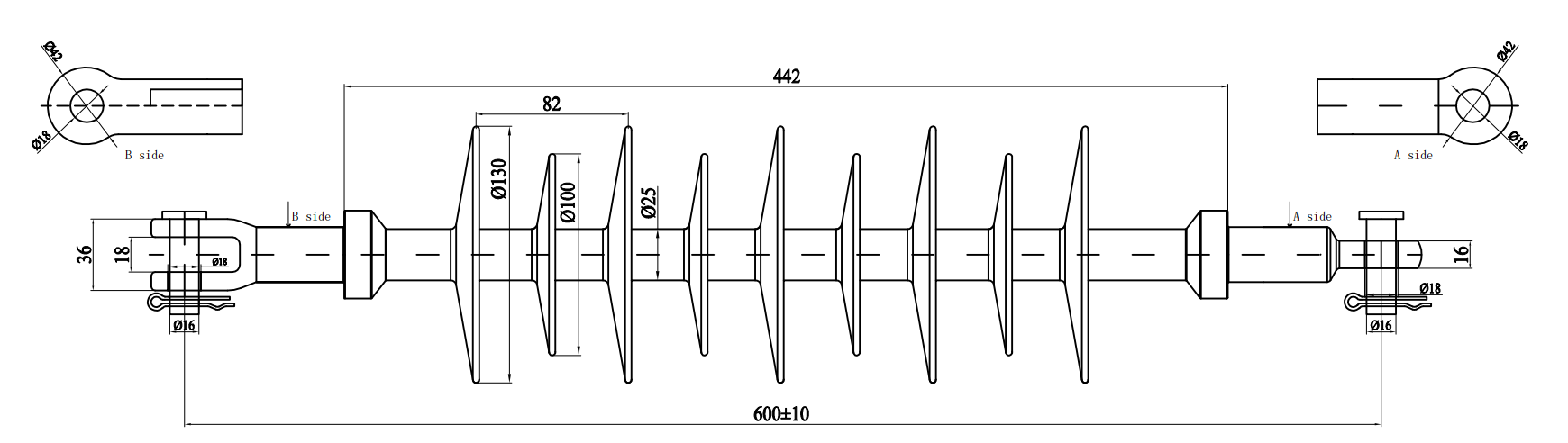
Specifications:
Product Type | Dimensions | Mechanical | Electrical | ||||||||
Height | Mini Dry | Mini | Diameter | Number of | Diameter | Specified | Routine | Rated Voltage | Lightning | Power | |
FXB-33-70CT | 605 ±10 | 450 | 1200 | 18 | 9 | 130/100 | 70 | 35 | 33 | 230 | 95 |
Order Information: | |||||||||||
Product Parts Display:
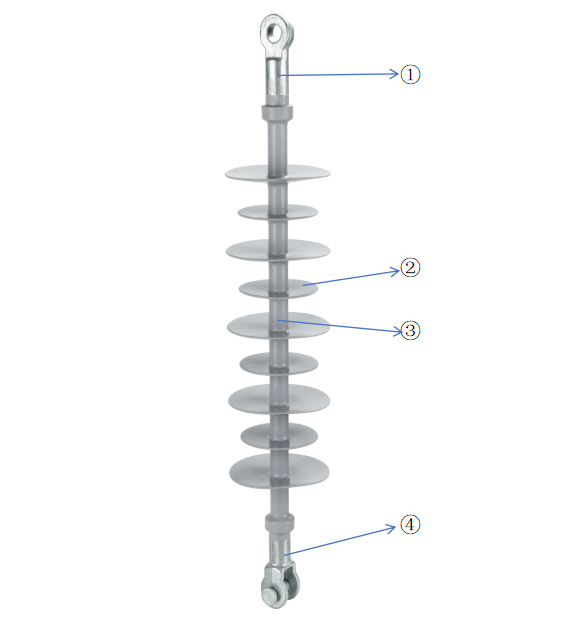
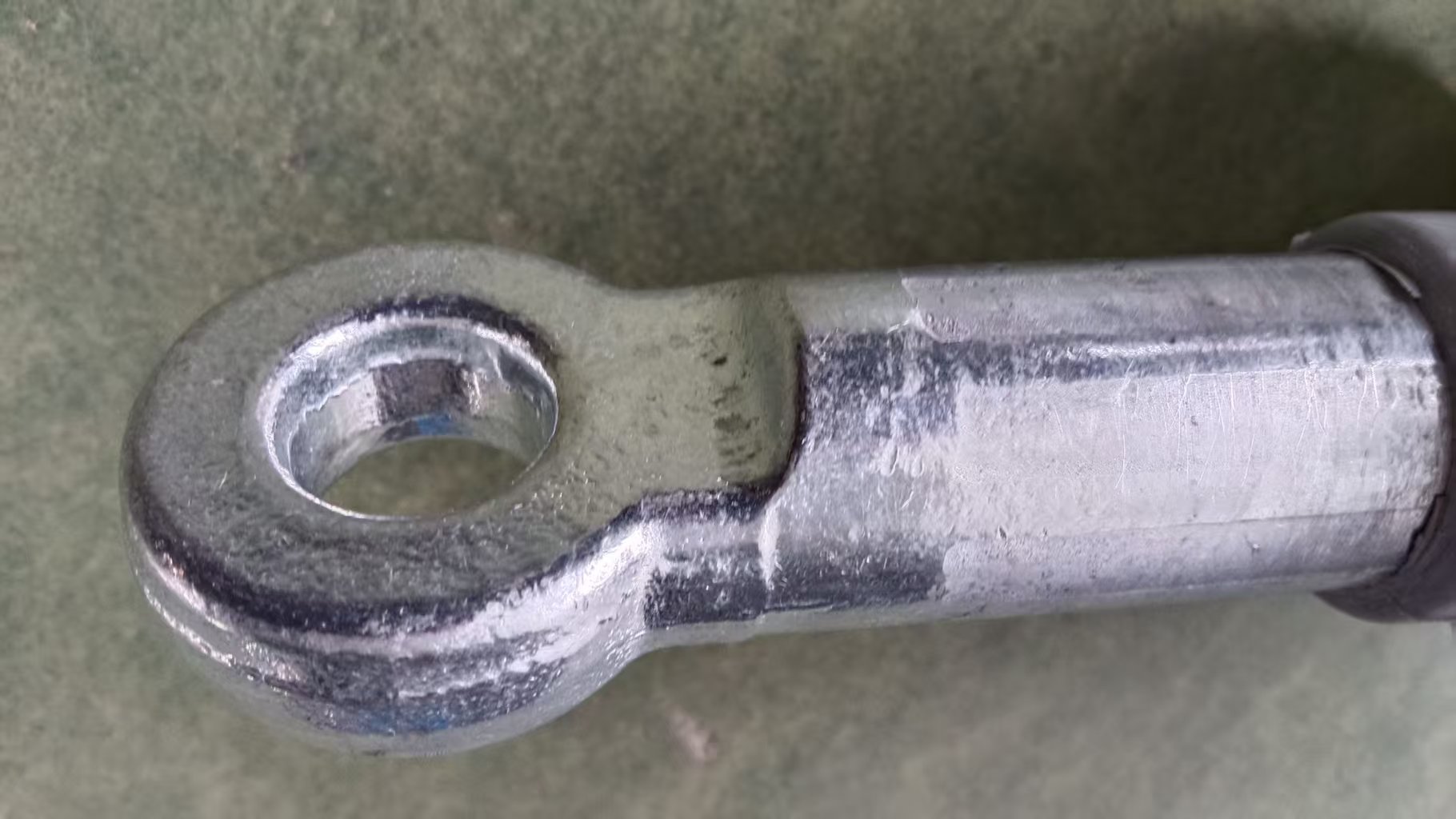
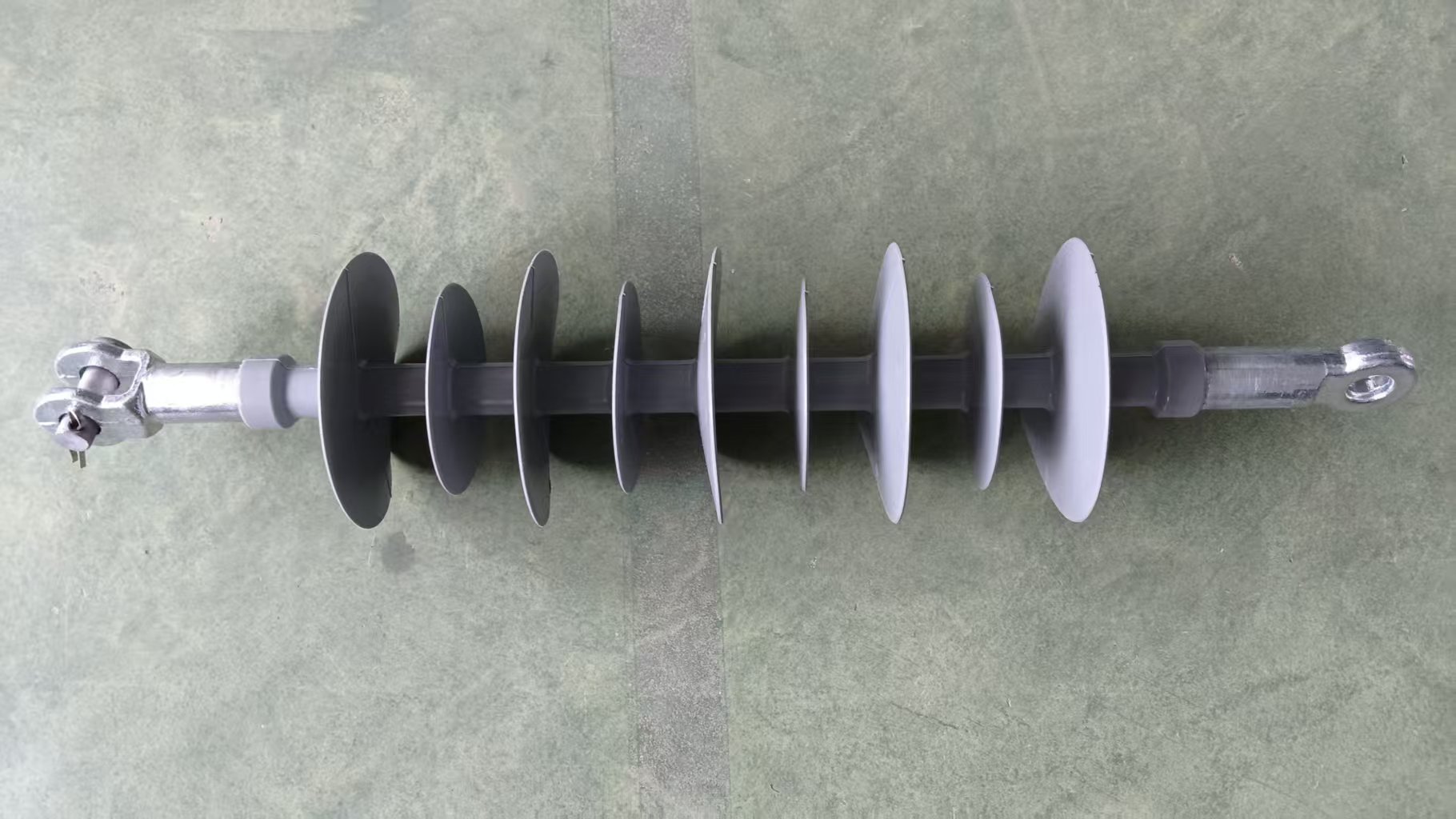
① End Fitting type: Tongue
Forged steel and hot dip galvanized,minimum thinkness of the galvanization:86µm
② The thickness of silicone rubber housing is more than 3mm,it is in accordance with IEC standard.
③ The acid-resistance,high terperature-resistance core rod use the materials epoxy & glassfiber.
④ End fitting type: Clevis
Forged steel and hot dip galvanized, minimum thinkness of the galvanization:86µm
Construction:
This composite tension insulatorfeatures a sophisticated and optimized design:
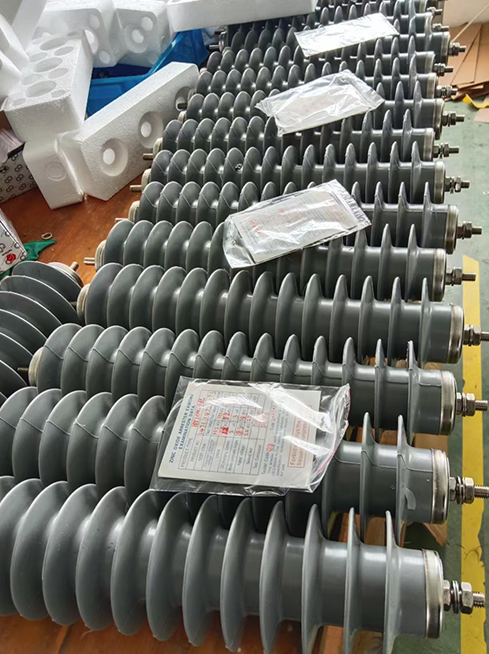
Core Rod: The central load-bearing element is a high-strength rod made of Fiberglass-Reinforced Plastic (FRP). This core provides the exceptional tensile strength (70kN) and acts as the primary internal insulation barrier.
Weathersheds (Sheds): The grey external housing is made of High-Temperature Vulcanized (HTV) Silicone Rubber. It features a 9-shed, alternating "big-small" shed design. This configuration is critical for:
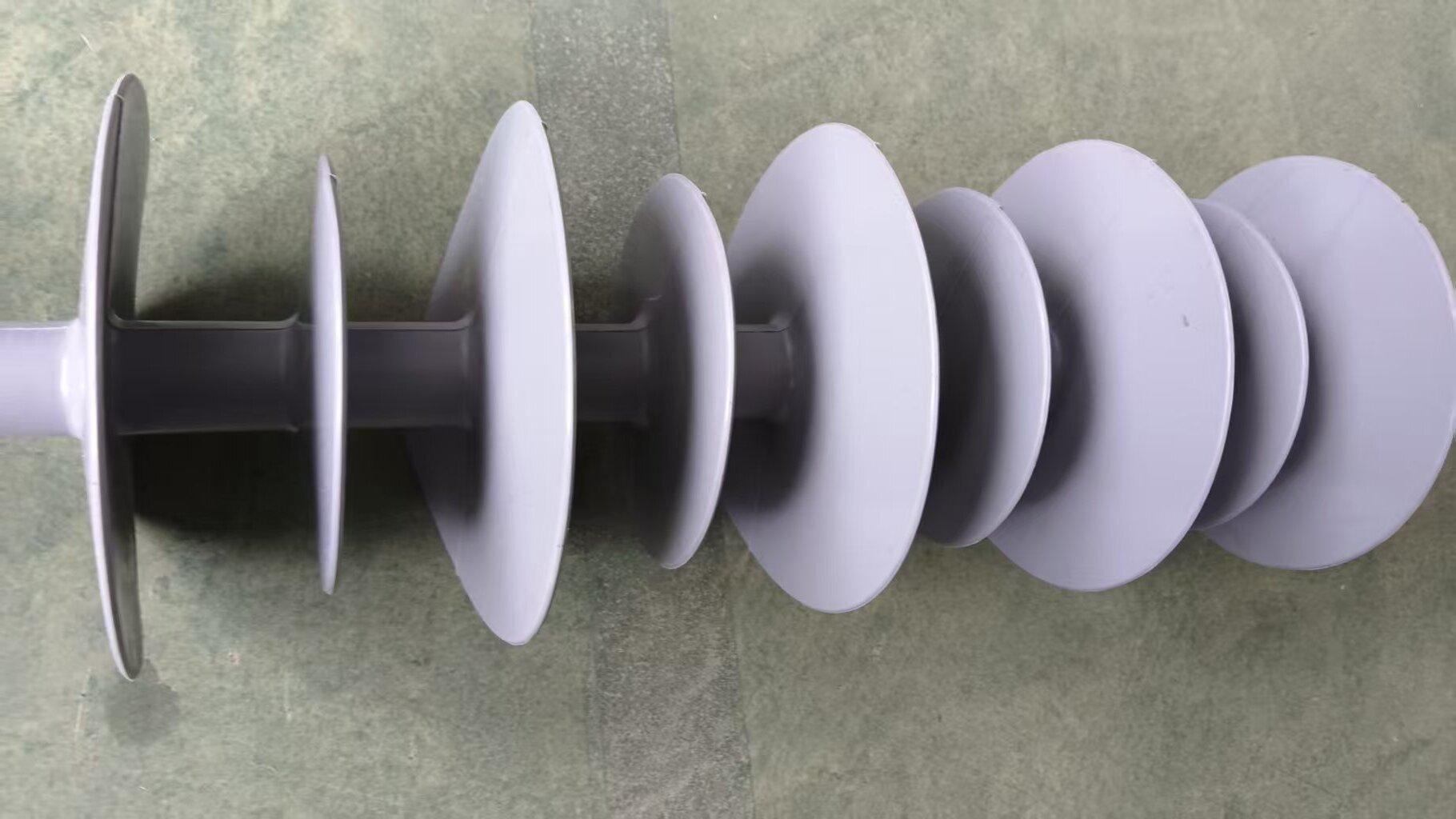
Maximizing Creepage Distance: The specific arrangement creates a long leakage path of 1200mm along the surface, preventing flashover under polluted or wet conditions.
Superior Pollution Performance: The alternating sheds disrupt the path of water droplets and prevent the formation of a continuous conductive film.
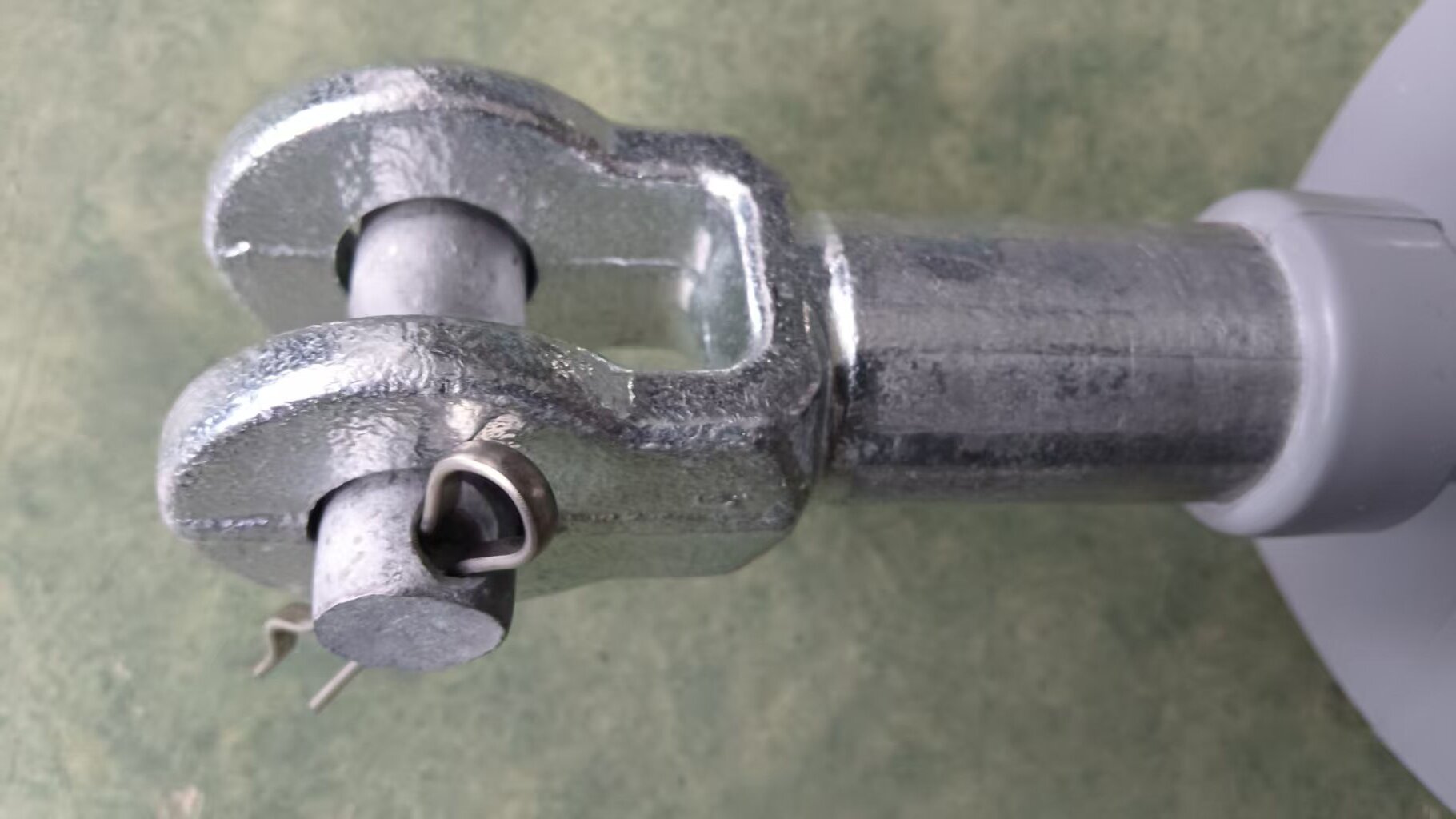
End Fittings: Made of high-strength forged steel, the metal end fittings (visible at the top and bottom) are permanently attached to the FRP core. They feature a standard ball-and-socket or clevis-and-tongue design for easy connection to tower cross-arms and conductor strings. The interface between the rubber housing and the end fittings is meticulously sealed to prevent moisture ingress.
Structural Height: The total distance between the two end fittings is 605mm, a key dimension for electrical and mechanical design.
Key Features:
Lightweight: silicone insulators are approximately 90% lighter than equivalent porcelain strings, drastically reducing installation time, labor, and load on supporting structures.
Exceptional Hydrophobicity: The silicone rubber material naturally repels water. This property, which is transferable and recoverable, ensures excellent performance in rain, fog, and high-humidity conditions, minimizing leakage currents.
High Mechanical Strength-to-Weight Ratio: The FRP core provides immense tensile strength (70kN) without the brittleness and weight of porcelain.
Vandalism and Impact Resistance: The polymer construction is highly resistant to damage from gunshots, flying stones, or accidental impacts, which can shatter porcelain insulators.
Excellent UV and Ozone Resistance: The HTV silicone rubber formulation is stabilized to withstand decades of exposure to sunlight and atmospheric ozone without significant degradation.
Maintenance-Free: Unlike porcelain insulators that require periodic cleaning, composite insulators are generally maintenance-free due to their self-cleaning surface properties.
Production Process:
The manufacturing is a precise, multi-stage process:
Core Rod Preparation: The FRP rod is manufactured by pultrusion, ensuring consistent fiber alignment and strength. Its surface is treated to enhance adhesion to the rubber.
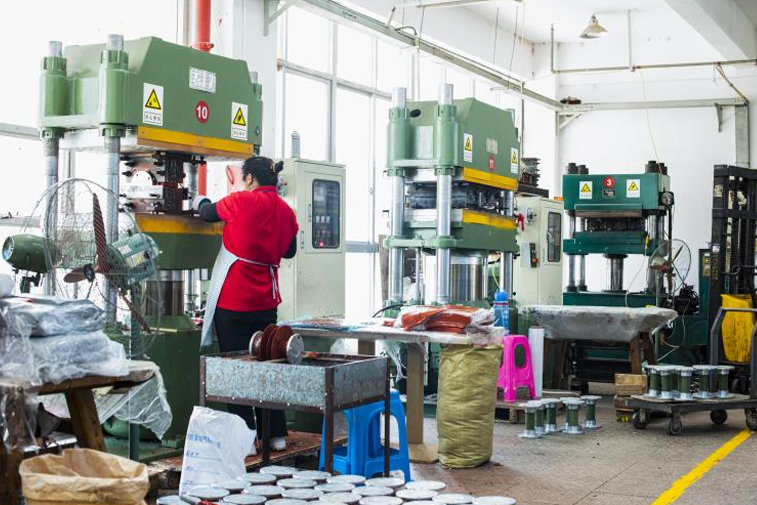
Molding of Weathersheds: The HTV silicone rubber is injection molded directly onto the FRP core rod using a specialized mold that creates the precise 9-shed, big-small profile. This process, often performed under heat and pressure (vulcanization), creates a permanent, seamless bond between the rubber and the core.
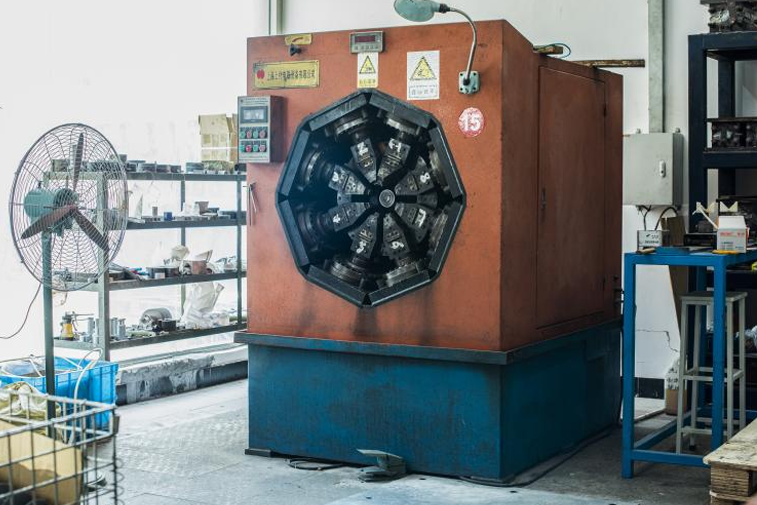
End Fitting Assembly: The metal end fittings are attached to the ends of the FRP core, typically using a controlled crimping or swaging process. This creates a strong, reliable mechanical joint. The critical sealing area is filled with a sealing compound or an additional rubber gasket.
Curing and Vulcanization: The entire assembly undergoes a final curing cycle to complete the vulcanization of the silicone rubber, ensuring optimal mechanical and electrical properties.
Rigorous Quality Control: Each insulator is subjected to strict tests, including:
Mechanical Proof Load Test: A sample from each batch is tested to a specified load (e.g., 50% of SML) to verify strength.
Electrical Tests: Power frequency withstand voltage and impulse withstand voltage tests are conducted to confirm electrical integrity.
Visual and Dimensional Inspection.
Application Scenarios:
This 33kV, 70kN transmission line insulator is ideally suited for:
Medium-Voltage Distribution Lines: As suspension insulators on 33kV overhead power lines in urban and rural areas.
Polluted and Coastal Environments: Its excellent pollution performance makes it the preferred choice in industrial areas, near the sea (salt fog), and in desert regions (cementing dust).
High-Altitude and Heavy Ice/Wind Areas: Its lightweight and robust design is advantageous in regions prone to severe weather.
Railway Electrification Systems: Used in catenary systems for railways due to their reliability and impact resistance.
Compact Transmission Lines: Where reduced clearance and lighter weight are required for right-of-way optimization.
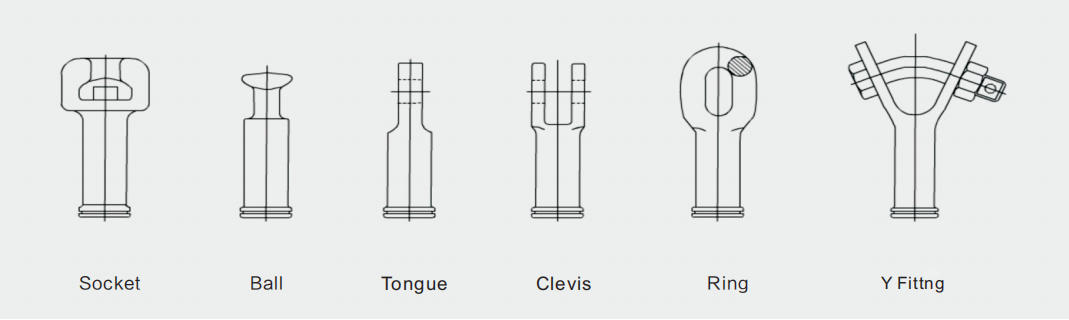
Two Ends Of Connecting Hardware List
| Attachedto the letter | WQ | WD | WU | CT | TT | UU | YQ | RR | |
| On behalfof fittings | Socket -Ball | Socket -Tongue | Socket- Clevis | Ball- Bal | Clevis-Tongue | Tongue-Tongue | Clevis- Clevis | Y-Ball | Ring-Ring |
| Connectionmark | 16-16 | 16-7 | 16-7 | 16-16 | 7-7 | 7-7 | 7-7 | 7-7 | 7-7 |
1. According to the requirements of hardware in models are indicated in the attached letter;
2. According to the requirements of users can formulate and match ends fitting;
3. Silicone rubber color gray as the default,can also choose the other colors.
4. Custom made according to customer's drawings
 |  |
 |  |
 |  |  |


