


Address
Nanzhai village, Liushi Town, yueqingCity, zhejiang Province, china
Tel
+86-13375775325

| Quantity: | |
|---|---|
Introduction:
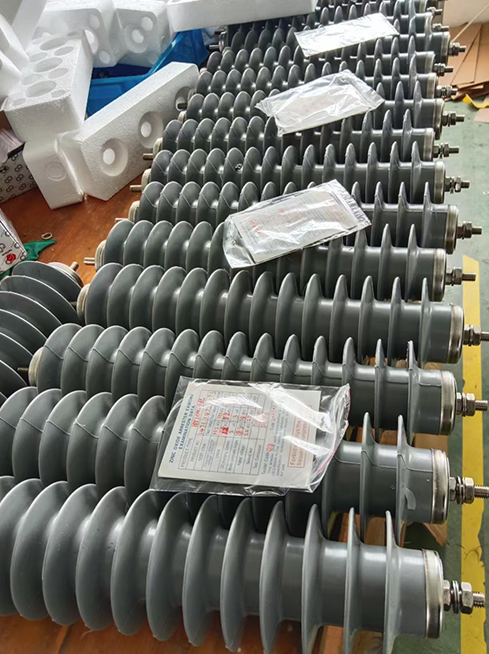
This is a 115kV, 70kN Long Rod Composite Suspension Insulator, a key component designed for electrical insulation and mechanical support in high-voltage power systems. The insulator features a robust construction with a Fiberglass Reinforced Plastic (FRP) core, which is shielded by a grey silicone rubber housing. The housing is molded into a distinctive profile of 28 sheds arranged in an alternating large-small (or parent-child) pattern. A critical feature is its substantial creepage distance of 3300mm, which is engineered to provide exceptional performance in polluted environments. Both ends of the insulator are fitted with single-eye metal end fittings, making it versatile for various connection configurations in transmission and substation applications.
Drawings:

Specifications:
Product Type | Dimensions | Mechanical | Electrical | ||||||||
Height | Mini Dry | Mini | Diameter | Number of | Diameter | Specified | Routine | Rated Voltage | Lightning | Power | |
FXBW-115-70 | 1340±15 | 1130 | 3300 | 18 | 28 | 142/112 | 70 | 35 | 115 | 550 | 255 |
Order Information: | |||||||||||
Key Features:
High Mechanical Strength (70kN): The polymer tension insulator is rated for a cantilever or bending load of 70 kiloNewtons, demonstrating its ability to withstand significant mechanical stresses from conductors, such as wind and ice loads.
Superior Shed Design (28-Shed, Large-Small Profile): The alternating large and small shed design is optimized to prevent the bridging of pollution and water between sheds. This configuration maximizes the effective leakage path and enhances performance in wet and contaminated conditions.
Excellent Hydrophobicity and Weather Resistance: The housing is made from High-Temperature Vulcanized (HTV) Silicone Rubber. This material possesses excellent hydrophobic (water-repelling) properties, which it retains over time. This characteristic suppresses leakage currents and reduces the risk of flashover. It is also highly resistant to UV radiation and aging.
Long Specific Creepage Distance (3300mm): The long creepage distance ensures a sufficient leakage path for electrical current along the surface, making the insulator highly reliable in areas with industrial pollution, coastal salt fog, or desert dust.
Lightweight and Vandal-Resistant: Compared to traditional porcelain or glass insulators, this composite insulator is significantly lighter, simplifying logistics and installation. The silicone rubber and FRP core are also highly impact-resistant, reducing damage from vandalism or flying debris.
Single-Ear End Fittings: The metal fittings at both ends are of the single-ear (clevis) type, providing a simple and reliable connection point for linking to other hardware on transmission towers or within substations.
Production Process and Workflow:
The manufacturing of this polymer suspension insulator is a precise, quality-controlled process:
Core Rod Production: The process begins with the creation of the Fiberglass Reinforced Plastic (FRP) core rod. This is done through a pultrusion process, where continuous glass fibers are impregnated with epoxy resin and pulled through a heated die to form a rod of exceptional tensile strength and dielectric properties.
Interface Treatment: The surface of the FRP rod is treated to ensure a perfect, permanent bond with the silicone rubber sheath.
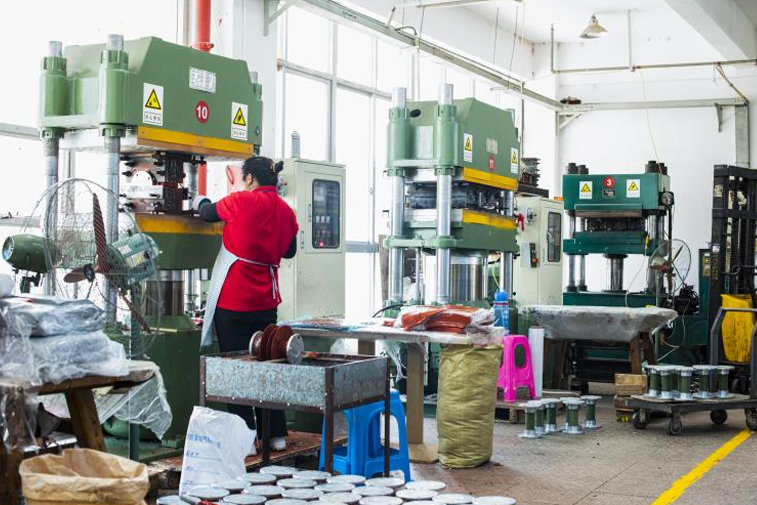
Injection Molding and Vulcanization: This is the most critical step. The HTV silicone rubber compound is injected into a mold that has the precise negative form of the 28-shed, large-small profile. The FRP rod is centered within this mold. Under high temperature and pressure, the rubber is molded and vulcanized (cured) directly onto the rod, forming an inseparable, waterproof bond.

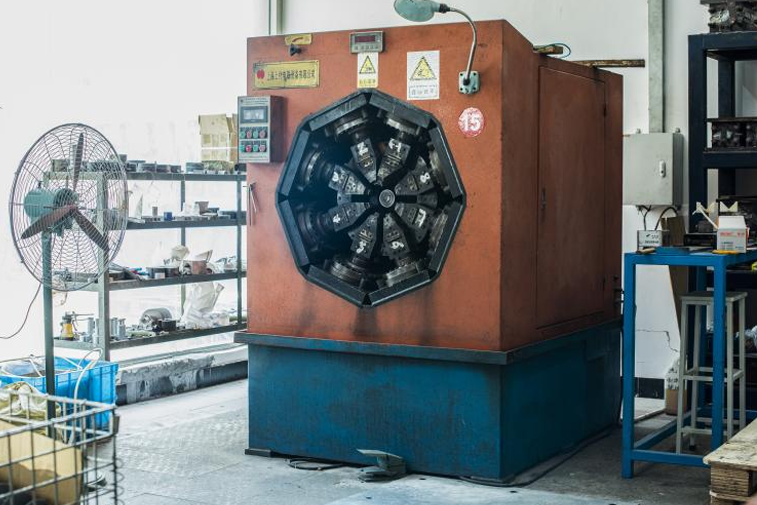
End Fitting Assembly: The forged steel, single-ear end fittings are assembled onto the ends of the FRP rod. This is typically done using a controlled compression crimping technique, which creates a strong mechanical lock. The interface is sealed with waterproof adhesive to prevent moisture ingress into the core.


Quality Control and Testing: Each insulator undergoes rigorous testing, which includes:
Visual and Dimensional Inspection: Checking for any surface defects and verifying the creepage distance and overall dimensions
Mechanical Routine Test (MRT): Each unit is subjected to a proof load (e.g., 50% of the specified mechanical load) to verify its short-term strength.
Electrical Tests: Including power frequency withstand voltage and lightning impulse voltage tests to confirm the dielectric strength meets 115kV system requirements.
Application Scenarios:
This 115kV 70kN Long Rod high voltage Composite Insulator is primarily used in:
115kV Overhead Transmission Lines: It is commonly used as a suspension or post insulator to support conductors and maintain safe electrical clearance from the grounded tower structure.
Electrical Substations: It is ideal for insulating busbars, disconnect switches, circuit breakers, and other equipment within 115kV substations. Its single-ear fittings allow for flexible mounting.
Polluted and Coastal Environments: Thanks to its long creepage distance and hydrophobic silicone rubber, it is perfectly suited for areas with high levels of contamination, such as industrial zones, coastal regions (salt mist), and arid areas prone to dust storms.
Areas Requiring High Reliability: Its robust design and resistance to shock make it a preferred choice for critical infrastructure where minimal downtime is essential.

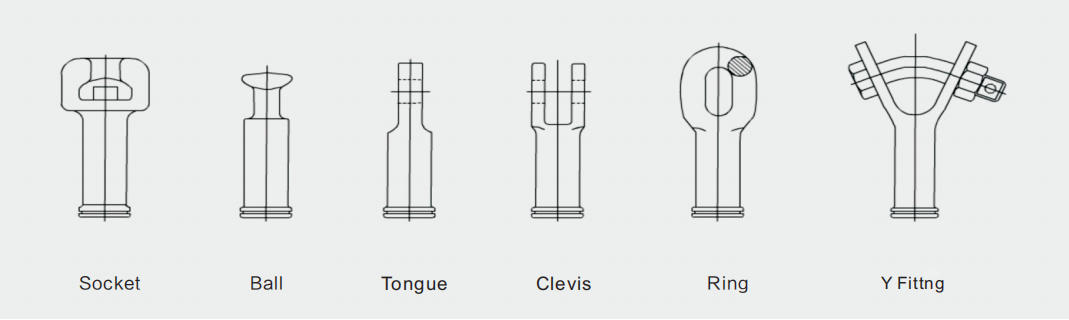
Two Ends Of Connecting Hardware List
| Attachedto the letter | WQ | WD | WU | CT | TT | UU | YQ | RR | |
| On behalfof fittings | Socket -Ball | Socket -Tongue | Socket- Clevis | Ball- Bal | Clevis-Tongue | Tongue-Tongue | Clevis- Clevis | Y-Ball | Ring-Ring |
| Connectionmark | 16-16 | 16-7 | 16-7 | 16-16 | 7-7 | 7-7 | 7-7 | 7-7 | 7-7 |
1. According to the requirements of hardware in models are indicated in the attached letter;
2. According to the requirements of users can formulate and match ends fitting;
3. Silicone rubber color gray as the default,can also choose the other colors.
4. Custom made according to customer's drawings
 |  |
 |  |
 |  |  |


