


Views: 0 Author: Site Editor Publish Time: 2026-09-15 Origin: Site


Grid stability dictates the heartbeat of modern infrastructure. High-voltage lines stretching across vast landscapes rely heavily on proper insulation to prevent catastrophic power failures. Traditional materials often succumb to severe environmental stress over time, leaving utility networks vulnerable to costly outages. In this comprehensive engineering guide, we break down how modern suspension insulators solve complex grid challenges efficiently, ensuring that power flows uninterrupted from generation plants to densely populated urban centers.
Suspension insulators serve as critical structural devices utilized to mechanically support and electrically isolate high-voltage conductors on overhead transmission lines.
The transition to modern composite materials has revolutionized grid infrastructure, offering a significantly lighter weight, superior pollution resistance, and streamlined installation compared to legacy ceramic units.
These components are highly scalable and precision-engineered for a wide spectrum of voltage levels, spanning from medium-voltage distribution networks up to ultra-high-voltage transmission corridors.
Silicone rubber features unique water-repelling properties, making these insulators the optimal choice for harsh, highly polluted, or coastal environments while drastically reducing maintenance cycles.
Field engineers know firsthand that carrying electricity over long distances requires robust hardware. A suspension insulator acts as a fundamental component designed to safely manage this task. Picture a towering steel lattice structure stretching across a valley. Unlike rigid pin-type insulators that sit atop a utility pole, a suspension insulator hangs downward from the cross-arm of the transmission tower. It typically consists of one or more insulating units connected in series to form a flexible string, which then securely cradles the conductor cable at its lowest point.
The core function of an Overhead Line Suspension Insulator is divided into two equally critical categories. Mechanically, transmission cables are incredibly heavy, often manufactured from Aluminum Conductor Steel Reinforced materials. The insulator must possess immense tensile strength to hold the dead weight of these cables across extended spans. Furthermore, it must absorb dynamic mechanical loads introduced by harsh environmental factors, including high-velocity crosswinds, heavy winter ice accumulation, and the physical aeolian vibrations caused by wind flow.
Electrically, the primary purpose is to prevent high-voltage current from leaking out of the live conductor wire and traveling up into the grounded metal structure of the tower. Should this electrical leakage occur, it would trigger a catastrophic short circuit, resulting in widespread power outages and severe safety hazards. Consequently, the insulator provides a high-resistance barrier that forces the electrical current to remain strictly within the transmission cable.
Understanding the true value of these components requires examining how grid engineers deploy them in real-world scenarios. Their applications are largely dictated by the physical and electrical demands of the regional power grid.
Suspension configurations are the absolute industry standard for any overhead power line operating above 33kV. At lower distribution voltages, rigid pin-type insulators remain sufficient and cost-effective. However, as the voltage scales beyond 33kV, pin insulators become economically and structurally unviable because they require excessive material, become impractically heavy, and lose mechanical stability. By utilizing a suspended string design, engineers can effectively manage these higher voltages. The flexible nature of the hanging string allows the heavy conductor to swing slightly during turbulent winds, which significantly mitigates the mechanical stress transferred directly to the rigid cross-arm of the tower.
While typically suspended vertically, these versatile insulators are frequently deployed in horizontal configurations. When utilized in this manner, they are referred to as strain insulators. This specific application proves critical at dead-end towers where a transmission line terminates, at sharp directional curves in the power line routing, or during unusually long spans such as wide river or valley crossings. In these challenging locations, the mechanical tension exerted on the cable is exponentially higher than on a standard straight-line tower. Depending on the calculated load, engineers will often install two or more insulator strings in parallel to safely distribute the extreme horizontal pulling force.
Global power grids are undergoing a massive transformation. Driven by the rapid integration of renewable energy sources and the increasing frequency of extreme weather events, utility operators are entirely rethinking their infrastructure investments. Industry analyses reveal a pronounced shift away from traditional ceramics toward advanced polymer-based insulation.
Aging grid infrastructure frequently fails under the stress of severe storms, heavy ice loads, and rising industrial pollution. Consequently, procurement strategies now heavily favor materials that offer high resilience and low operational expenditures. Utilities are actively phasing out heavy porcelain in favor of lightweight, hydrophobic silicone alternatives. This transition not only reduces the structural load on aging transmission towers but also minimizes the need for dangerous and expensive helicopter washing in expanding urban and coastal grids.
For over a century, global power grids relied almost exclusively on porcelain and toughened glass insulators. While historically effective, these legacy materials present ongoing logistical and operational challenges for modern utility operators.
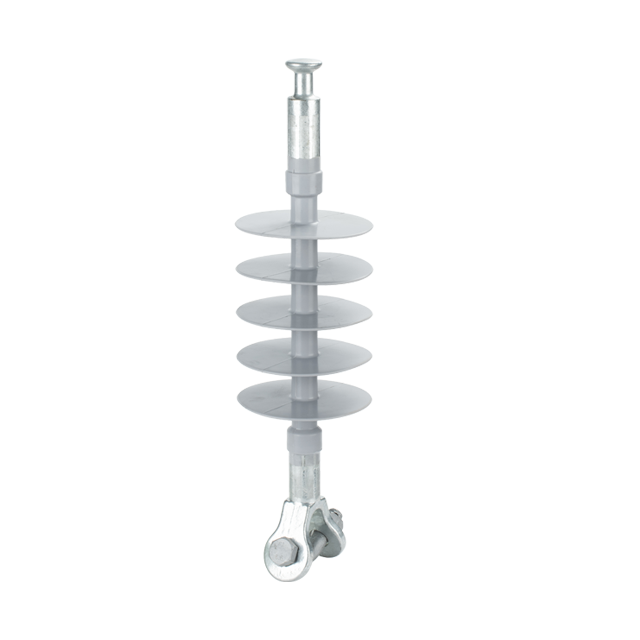
Traditional porcelain and glass insulators are inherently heavy and notoriously brittle. A standard porcelain string for a high-voltage line can weigh hundreds of kilograms, requiring heavy lifting machinery and large crews to install safely. In stark contrast, modern engineering has championed the composite suspension insulator. These advanced units are constructed using a two-part system. A central core made of Fiberglass Reinforced Polymer provides exceptional tensile strength, while an outer housing forged from High-Temperature Vulcanized silicone rubber protects the core. This innovative combination entirely eliminates the brittleness of ceramics while drastically slashing the overall weight.
Feature |
Traditional Porcelain |
Modern Composite (Silicone) |
|---|---|---|
Weight |
Extremely heavy, requires machinery |
Up to 90% lighter, easy manual handling |
Pollution Resistance |
Poor, forms conductive water films |
Excellent, hydrophobic surface repels water |
Mechanical Impact |
Brittle, prone to shattering |
Highly resilient, vandal and shock-proof |
Maintenance |
Requires frequent, costly washing |
Virtually maintenance-free |
The most significant technological advantage of composite materials lies in the surface physics of silicone rubber. Specifically, silicone possesses inherent hydrophobicity, meaning it actively repels water. When rain falls on a traditional porcelain insulator, the water tends to flatten out, forming a continuous conductive film across the surface. If that surface is coated in industrial pollution or coastal salt, this water film becomes highly conductive, leading to electrical leakage currents and eventual flashovers. These dangerous electrical arcs cause immediate grid failure.
Silicone rubber brilliantly prevents this phenomenon. Its hydrophobic surface forces water to bead up into isolated droplets rather than forming a continuous film. Because the water droplets remain physically separated, no conductive path is established, even in the presence of heavy surface contamination. Moreover, silicone rubber exhibits a unique hydrophobicity transfer property. Low-molecular-weight siloxanes migrate from within the rubber to the outer surface, encapsulating dirt and pollution, thereby rendering the pollution layer itself water-repellent.
The inherent versatility of composite technology allows it to be precisely engineered for specific voltage classifications. As the voltage increases from local distribution to regional transmission, the structural and electrical requirements shift dramatically.
In medium voltage networks, which distribute power from regional substations directly to local urban or industrial areas, reliability and compact design are paramount. While pin insulators are still common at these voltages, suspension insulators are frequently deployed on tension poles, dead-ends, and angle towers where enhanced mechanical stability is required.
For standard distribution lines, engineers often specify an 11kV Silicone Suspension Insulator featuring a Specified Mechanical Load of 70kN to provide a lightweight, maintenance-free solution. In more demanding areas requiring higher capacity, such as heavy industrial zones or extended rural distribution feeds, utilities upgrade to a 24kV Silicone Rubber Suspension Insulator. At the 24kV tier, the insulator must manage higher electrical fields and a greater potential for tracking and erosion. A high-quality silicone housing with adequate creepage distance becomes absolutely essential for long-term grid stability.
When transitioning into the high-voltage and extra-high-voltage sectors, the engineering demands become extreme. At 110kV, the electrical stress on the insulator surface is intense, and the physical weight of bundled conductors requires massive mechanical support.
At this elevated tier, a 110kV Composite Suspension Insulator is considered the premier solution for cross-country transmission towers and major grid interconnects. For these applications, the fiberglass core must be rigorously rated to handle severe tension. Engineers typically require a Specified Mechanical Load of 120kN or higher to prevent catastrophic structural failure. Additionally, because high voltages generate corona discharges, these insulators are carefully engineered with specific shed profiles and paired with grading rings to manage the electric field and protect the silicone housing from degradation.
Procurement managers and grid engineers base their purchasing decisions on total life-cycle costs and operational reliability. The industry-wide shift toward silicone rubber composite models is driven by several highly quantifiable advantages.
Lightweight Design: Composite insulators are typically 70 to 90 percent lighter than their porcelain equivalents of the exact same voltage rating. This massive weight reduction lowers transportation costs, reduces the physical strain on installation crews, and allows structural engineers to design lighter, more cost-effective transmission towers.
Superior Pollution Performance: Thanks to the hydrophobicity of silicone rubber, these insulators perform flawlessly in coastal areas subjected to salt fog, heavy industrial zones with airborne particulates, and arid deserts. Crucially, they require little to no routine washing, saving utilities vast sums in operational expenditures.
High Mechanical Strength: The pultruded fiberglass core boasts a tensile strength that rivals steel. When properly crimped to galvanized steel end fittings, the insulator effortlessly withstands extreme dynamic loads, including heavy ice accumulation and gale-force winds.
Vandalism and Earthquake Resistance: The resilient nature of silicone rubber and fiberglass means these insulators simply do not shatter. They are highly resistant to mechanical impacts, rough handling during transit, and vandalism. Their flexible nature also provides superior seismic performance during earthquakes.
Selecting the correct insulator is a highly technical process requiring careful calculation of both electrical and mechanical parameters. Procurement teams must evaluate multiple criteria to ensure grid safety and strict compliance with international standards.
The most fundamental step involves matching the insulator to the maximum operating voltage of the system. An insulator must be rated not just for the nominal voltage, but for potential transient overvoltages such as lightning strikes or switching surges. The system voltage dictates the required dry arcing distance and the minimum creepage distance. The creepage distance is the shortest path along the surface of the insulator from the live end to the grounded end. The design must comply with international standards like IEC 60815, which provides detailed guidelines for selecting insulators based on polluted environmental conditions.
Because suspension insulators physically support the weight of overhead conductors, mechanical strength is just as crucial as electrical resistance. Engineers must calculate the Specified Mechanical Load, which is the minimum load the insulator is guaranteed to withstand before structural failure. To determine this accurately, factors such as conductor weight, winter ice loading, lateral wind forces, and extreme tension forces at dead-end towers must be meticulously calculated. Standard composite insulators typically offer ratings ranging from 70kN for lighter distribution lines up to 210kN or higher for heavy-duty transmission networks.
The transition from porcelain to composite materials has streamlined installation procedures. However, to maximize the 20-to-30-year lifespan of a composite insulator, strict handling protocols must be observed by field crews.
Despite their high tensile strength, composite insulators require careful handling to protect the delicate silicone rubber sheds. The housing is designed strictly for electrical isolation, not mechanical impact. Field technicians must never drag insulators across the ground, as this can tear the silicone sheds or damage the galvanized steel end fittings. Furthermore, lifting should always be done using the metal end fittings. Crews should never wrap nylon slings tightly around the silicone housing, which could bend and damage the internal fiberglass core.
Once installed, a properly specified silicone rubber insulator is largely maintenance-free. Standard maintenance protocols have shifted from costly helicopter pressure-washing to simple visual inspections. Utilities now frequently utilize Unmanned Aerial Vehicles equipped with high-resolution thermal cameras to check for physical damage, such as bird pecking, or abnormal heat signatures that might indicate internal tracking.
To ensure uncompromised reliability, procurement officers should exclusively source insulators that comply with stringent international testing standards, primarily IEC 61109. Reputable manufacturers subject their products to a rigorous battery of tests before they ever reach the field.
Design tests verify the ultimate suitability of the raw materials, utilizing 1000-hour salt fog tracking and erosion tests to prove the silicone's resistance to electrical degradation. Type tests are then conducted to verify specific design characteristics, including dry lightning impulse withstand voltages and damage limit proofs for the core. Finally, routine tests are performed on every single unit before shipping. This includes a visual inspection and the application of a Routine Test Load, usually set at 50 percent of the Specified Mechanical Load for at least 10 seconds, to guarantee there are no micro-fractures in the core or slippage in the end fittings.
Pin insulators are mounted rigidly on top of a cross-arm and are generally utilized for lower distribution voltages, typically up to 33kV. Suspension insulators hang vertically below the cross-arm, offer crucial flexibility against wind loads, and are deployed for much higher voltages by linking multiple units together or utilizing a single long-rod composite design.
Composite materials are significantly lighter, reducing the structural load on transmission towers and drastically lowering freight costs. They are highly resistant to shattering from vandalism or seismic activity. Most importantly, their silicone rubber housing naturally repels water, which prevents electrical flashovers in wet, polluted, or coastal environments without the need for regular, expensive washing.
Airborne pollution, such as industrial dust or coastal salt, settles on the insulator surface. When combined with moisture from fog or light rain, this pollution layer becomes highly conductive. On traditional porcelain, this creates a path for electrical leakage currents, leading to flashovers and grid outages. Silicone composite insulators mitigate this by encapsulating the pollution and maintaining a water-repellent surface.
At high voltages, typically 110kV and above, the intense electric field at the energized end of the insulator can ionize the surrounding air, creating a corona discharge. This discharge generates heat and ozone, which can degrade the silicone rubber over time. Corona rings are metal rings installed at the ends of the insulator to evenly distribute the electric field, preventing corona discharge and extending the lifespan of the unit.
When properly specified according to system voltage and environmental pollution severity, and when equipped with necessary hardware like corona rings, high-quality composite insulators have an expected service life of 20 to 30 years. Their longevity is highly dependent on the quality of the High-Temperature Vulcanized silicone utilized during the manufacturing process.
Yes. When an insulator string is installed horizontally to handle the high mechanical tension of the conductor at a dead-end tower, a sharp turn, or a river crossing, it is referred to as a strain insulator. Composite insulators are exceptionally well-suited for strain applications due to the immense tensile strength provided by their internal fiberglass cores.
Suspension insulators remain the absolute backbone of modern overhead power grids. By safely supporting heavy overhead conductors, these devices effectively prevent critical electrical faults that could otherwise cripple a regional network. Choosing a composite suspension insulator ensures long-term reliability and structural integrity under the harshest environmental conditions. Ultimately, silicone rubber models offer the best return on investment for utilities, drastically reducing maintenance costs across all voltage levels while upgrading grid infrastructure for the future. For precise engineering configurations and a complete catalog of high-performance grid solutions, visit Langao Power to find the exact insulators tailored to your specific project requirements.


