Address
Nanzhai village, Liushi Town, yueqingCity, zhejiang Province, china
Tel
+86-13375775325
Views: 0 Author: Site Editor Publish Time: 2026-06-16 Origin: Site

The global transition from traditional porcelain and glass to polymer-based materials represents a major leap in grid modernization. Utilities are actively rethinking their approach to overhead line design. Distribution networks face increasing pressure today. Environmental contamination causes frequent power outages. Installation constraints delay critical infrastructure upgrades. Stringent maintenance budgets leave little room for operational errors. Heavy ceramic components complicate installations and stretch labor resources thin.
Procurement engineers and network designers need a reliable, evidence-based framework. This guide clarifies how to specify polymer components across various distribution scenarios. You will learn core applications, mechanical benefits, and strict evaluation criteria to maximize grid reliability. By understanding silicone formulations, core sealing techniques, and adherence to IEC/ANSI standards, you can make informed specifying decisions. This guide ensures your next grid upgrade maximizes reliability while minimizing unexpected failures.
Primary Value Driver: Composite materials significantly lower Total Cost of Ownership (TCO) through reduced weight, lower breakage rates, and minimized maintenance.
Core Applications: Highly effective in overhead distribution lines, high-pollution zones, and compact urban substations.
Key Advantage: Silicone rubber housings offer inherent hydrophobicity, reducing pollution-induced flashover risks.
Evaluation Focus: Successful implementation requires vetting manufacturers based on silicone formulations, core sealing techniques, and adherence to IEC/ANSI standards.
Grids shift toward polymer materials to solve deep-rooted reliability problems. Traditional ceramic units are notoriously prone to vandalism. They suffer brittle fractures during routine transport and installation. In highly contaminated areas, they require frequent and costly washing schedules just to prevent flashovers. These vulnerabilities force grid operators to seek robust, modern alternatives.
Weight reduction drives immediate logistical benefits. Polymer units weigh up to 90 percent less than equivalent porcelain strings. This extreme weight difference directly impacts your freight costs. It simplifies rigging complexity in the field. Line crews spend fewer labor hours hauling heavy materials across challenging terrain. You can move significantly more units per truckload, speeding up emergency restoration efforts.
We must also evaluate the balance between upfront expenses and long-term operational efficiency. Initial unit prices sometimes vary between polymer and glass. However, extended maintenance intervals heavily favor polymer alternatives. Faster installation times reduce labor bills. They eliminate routine washing cycles in heavily polluted regions. This operational efficiency consistently delivers superior long-term budget performance. Utilities quickly realize these logistics and maintenance advantages compound over the asset's lifespan.
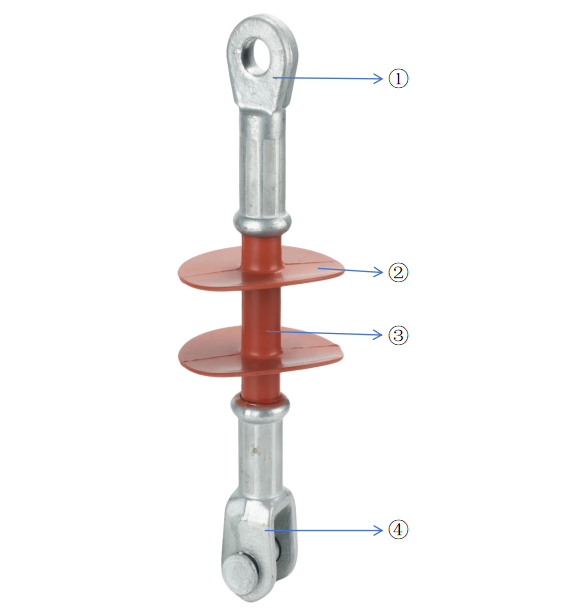
Overhead lines present distinct mechanical challenges. Dead-end applications and sharp line angles demand exceptional tensile strength. Here, engineers routinely deploy a polymer tension insulator to anchor conductors securely. These units leverage a pultruded fiberglass core. This core provides an incredibly high tensile strength-to-weight ratio. They handle massive line tension without adding unnecessary bulk to the pole structure.
Straight-line support requires a different approach. The composite suspension insulator plays a critical role here. It secures the conductor while allowing the network to handle dynamic wind stresses. A major advantage emerges when upgrading existing tower capacities. You can increase conductor sizes without reinforcing the underlying steel structures. The massive weight savings from polymer units make these high-capacity upgrades structurally feasible.
Vibration control adds another layer of performance. Overhead lines experience constant aeolian vibrations caused by steady winds. Rigid ceramic alternatives transfer this kinetic energy directly to the metal fittings. Over time, this causes hardware fatigue. In contrast, the flexibility of the fiberglass core absorbs these dynamic loads. This dampening effect reduces mechanical fatigue on both the conductor and the support hardware, extending the life of your entire overhead assembly.
Coastal and industrial zones present severe environmental challenges. Airborne salt, chemical dust, and heavy particulates settle constantly on line equipment. A standard composite insulator tackles these threats through its hydrophobic silicone rubber housing. The silicone surface actively repels water. It prevents continuous moisture films from forming across the unit. Furthermore, low molecular weight (LMW) siloxanes naturally migrate to the surface. They encapsulate dirt and salt particles, rendering the pollution layer non-conductive.
This hydrophobic advantage drastically reduces electrical failures. Engineers document massive reductions in dry-band arcing. Pollution-induced flashovers plummet in coastal salt-fog environments. Industrial zones with heavy particulate fallout see similar reliability improvements. The polymer surface effectively breaks the continuous electrical path, keeping leakage currents safely at bay.
Perhaps the biggest operational shift is the elimination of routine washing. Traditional glass and porcelain require costly live-line washing programs in high-pollution areas. These washing cycles involve specialized equipment and introduce high safety risks to personnel. Upgrading to silicone-housed units phases out these washing requirements entirely. Line crews stay safer. Maintenance budgets shrink dramatically. The distribution grid remains stable even during prolonged dry spells followed by sudden light rain.
Urban substations face extreme real estate limitations. Expanding the physical footprint is rarely an option due to high land costs and city zoning laws. Engineers use polymer components to achieve tighter phase-to-phase clearances. The superior dielectric strength of silicone profiles allows for more compact equipment designs. You can fit higher-capacity infrastructure into the exact same spatial footprint, optimizing existing substation layouts.
Safety remains paramount in densely populated areas. Porcelain carries a notorious failure mode: explosive shattering. A sudden electrical fault or extreme thermal stress can send sharp ceramic shrapnel flying in all directions. This violently endangers personnel and destroys nearby sensitive equipment. Polymer units completely eliminate this shatter risk. They fail safely without explosive fragmentation. This protects human life and adjacent high-value substation assets.
Earthquake-prone regions demand rigorous structural resilience. Ceramic rigidity becomes a severe liability during seismic events. Polymer units feature enhanced shock absorption capabilities. Their flexible fiberglass cores bend and recover under extreme dynamic stress. This flexibility makes them the preferred specification for distribution networks in active fault zones. They prevent catastrophic cascade failures during major tremors, ensuring rapid power restoration after an earthquake.
Procurement engineers must vet products carefully. Not all polymers deliver equal field performance. Material formulations vary widely between manufacturers. You must specify High-Temperature Vulcanized (HTV) silicone rubber over inferior EPDM or blended materials. HTV silicone provides superior UV resistance. It ensures long-term hydrophobicity transfer, which keeps the line secure decade after decade.
Mechanical load ratings require precise matching. You must align the Specified Mechanical Load (SML) and Routine Test Load (RTL) to actual network requirements. Avoid the temptation of extreme over-engineering. Specifying massively oversized SML ratings unnecessarily increases costs and adds unneeded bulk. Calculate expected ice and wind loads accurately, then specify the appropriate rating.
End-fitting seal integrity represents the most critical failure point. Moisture ingress into the fiberglass core causes catastrophic brittle fracture. You must evaluate the manufacturer's crimping process rigorously. Acoustic emission monitoring during crimping ensures optimal compression without crushing the internal glass fibers. A robust triple-seal design prevents any moisture from reaching the vulnerable core interface.
Finally, mandate strict standard compliance. Your shortlisted suppliers must provide independent type-test reports. Demand adherence to IEC 61109 for overhead line applications. Require IEC 62217 for general polymeric testing procedures. In North America, verify ANSI C29.13 compliance. These global standards ensure baseline electrical and mechanical reliability.
Test Category | Applicable Standard | Key Evaluation Metric |
|---|---|---|
Material Tracking & Erosion | IEC 62217 | 1000-hour salt fog endurance without tracking |
Mechanical Load Testing | IEC 61109 | Verification of Specified Mechanical Load (SML) |
Hydrophobicity Transfer | STRI Guide | HC1 to HC3 classification maintenance |
Field implementation introduces specific operational realities. While shatterproof, polymer sheds remain somewhat fragile. They are susceptible to cuts, gouges, and abrasions. Improper rigging during installation often causes mechanical damage. Line crews cannot drag them across abrasive gravel or drop heavy tools on the soft silicone housing. Proper handling protocols are absolutely essential to ensure a full service life.
Keep units in original crates until arriving at the installation pole.
Never lift the unit by grasping the soft silicone weather sheds.
Always attach rigging directly to the metal end-fittings.
Inspect the end-fitting seals visually for any shipping damage before hoisting.
Inspection procedures must evolve. Traditional visual inspections easily identified shattered glass disks from the ground. Polymer failures are much subtler. Identifying tracking and corona discharge requires specialized diagnostic tools. Utilities must invest in daylight UV cameras. Field technicians need specialized training to spot early degradation markers before they cause line drops.
Environmental fauna poses localized risks. Birds occasionally peck at the silicone sheds. Severe rodent damage occurs in specific geographical regions. You must address these localized threats proactively. Mitigation strategies include installing corona rings to optimize the electric field, which deters some nesting. You can also deploy physical animal guards near the end-fittings. Recognizing these risks early ensures a smoother transition to polymer technology.
Modernizing the grid demands smart material choices. Composite insulators are not a blanket replacement for every scenario. Instead, they serve as a targeted solution. They provide crucial weight reduction, unparalleled pollution resistance, and vital seismic resilience. They excel in overhead lines, congested substations, and coastal zones.
Your next steps should focus on targeted data gathering. We advise engineers to conduct a localized pollution severity assessment. Understand the specific contaminants affecting your network before making broad changes. Request detailed type-test reports from shortlisted suppliers before initiating bulk procurement. Focus heavily on HTV silicone formulations and proven crimping techniques. Strategic implementation of these advanced polymer components will ensure long-term grid stability and optimal operational efficiency.
A: The expected lifespan typically ranges between 15 and 25 years. This duration depends heavily on local environmental factors. Continuous UV exposure and heavy industrial pollution accelerate material aging. The quality of the original silicone formulation also dictates longevity. High-Temperature Vulcanized (HTV) silicone generally ensures a longer operational life compared to lower-grade alternatives.
A: Yes, they functionally replace glass in almost all environments. However, traditional glass remains popular because it shatters completely upon failure. This makes visual fault identification incredibly easy from the ground. Your choice depends entirely on utility inspection capabilities. If you lack daylight UV cameras to inspect polymer units, glass might remain a practical choice.
A: You cannot rely on simple visual checks. Field testing requires specialized diagnostic equipment. Technicians use daylight UV and corona cameras to detect surface tracking or discharge activity. Electric field measurement tools help identify internal core defects. Finally, technicians perform hydrophobicity classification (HC) tests using the STRI guide to measure how well the silicone repels water.