Address
Nanzhai village, Liushi Town, yueqingCity, zhejiang Province, china
Tel
+86-13375775325

| Quantity: | |
|---|---|
Introduction:
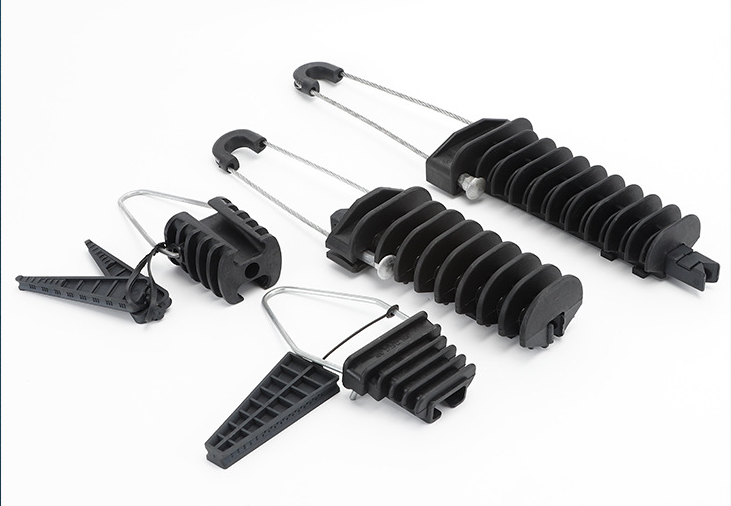
The PA1500 is a type of cable tension clamp, a crucial component used for securing and tensioning cables in overhead utility applications. Its primary distinguishing feature is its construction from high-strength black plastic (typically nylon or a durable polymer blend), which offers significant benefits over traditional all-metal clamps, including corrosion resistance and reduced weight.
Specifications:
Type | Cross section(mm²) |
STA | 1*10/1*16 |
STB | 2*16/2*25 |
STC | 4*16/4*25 |
STD | 1*16/1*70 |
LA1 | 4*16/4*25 |
LA2 | 2*6/2*16 |
DCR-1 | 1*4/1*25 |
DCR-2 | 2*4/2*25 |
2.1 | 16-25 |
PA1500 | 25-50 |
PA2000 | 54.6-70 |
Product Construction:
The PA1500 cable clamp is an assembly of several key components designed to work together:
Helical Plastic Sleeve: The main body consists of a series of interconnected, flat, disc-shaped segments forming a helical or multi-tiered sleeve. This unique segmented design is engineered for controlled deformation under tensile load.
Metal Thimble (Eyelet): A U-shaped metal thimble is integrated into one end of the plastic sleeve. This thimble acts as an anchor point.
Tensioning Wire Rope: A galvanized steel wire rope is threaded through this metal thimble. This rope is used to apply and hold the tensioning force.
Internal Gripping Mechanism: The other end of the plastic sleeve is closed and contains an internal mechanism (such as a wedge or high-strength gripping insert) that securely bites onto the main cable once tension is applied. This part is not fully visible from the outside.
Key Features and Advantages:
Corrosion Resistance: The plastic construction makes it inherently resistant to rust and corrosion, ideal for harsh outdoor environments. This reduces long-term maintenance needs.
Lightweight: Compared to equivalent metal clamps, the PA1500 cable connector is significantly lighter, easing handling, transportation, and installation.
Self-Adjusting/Compensating Design: As tension is applied via the wire rope, the segmented plastic sleeve compresses and adjusts along its length. This ensures an even distribution of pressure around the cable, preventing point loads that could damage it.
Excellent Grip and Vibration Damping: The design provides a firm, reliable grip on the cable. The plastic material also helps dampen vibrations caused by wind, enhancing the cable's service life.
Low Friction & Cable Protection: The smooth plastic surface minimizes abrasion and wear on the cable jacket during both the installation tensioning process and long-term operation.
Ease of Installation: The design is straightforward, allowing for quick and simple attachment to the cable and wire rope, reducing labor time.
Production Process:
The manufacturing of the PA1500 dead end clamp involves standard industrial processes:
Injection Molding: The primary plastic sleeve component is mass-produced using injection molding. Pellets of the polymer (e.g., Nylon) are heated and injected under high pressure into a mold that forms the distinctive segmented shape.
Metal Stamping and Forming: The U-shaped thimble is fabricated from sheet metal, likely through stamping (to cut the shape) and bending/forming processes. It is typically galvanized for corrosion resistance.
Wire Rope Fabrication: The tensioning rope is made from high-tensile steel wires, stranded together, and fitted with a loop or end-stop.
Final Assembly: The metal thimble and any internal gripping components (wedges, inserts) are assembled into the molded plastic sleeve. The pre-fabricated wire rope is then attached to the thimble to complete the unit.
Application Scenarios:
The PA1500 Cable Anchor Clamp is widely used in overhead utility infrastructure where reliable cable tensioning is required:
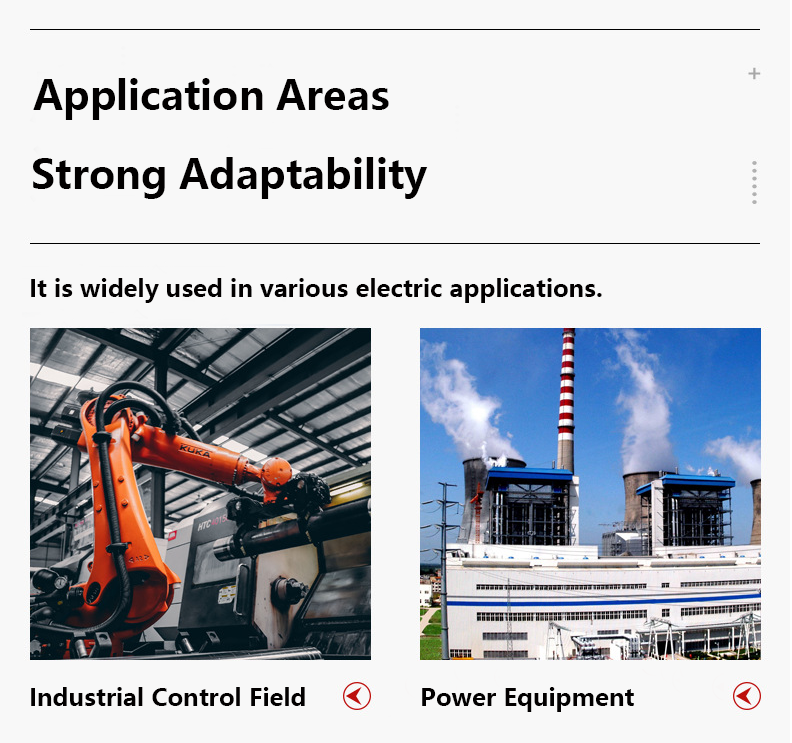
Electrical Power Transmission and Distribution: For tensioning and securing conductors (wires) on overhead power lines, from local distribution to higher-voltage transmission systems.
Telecommunications: For securing fiber optic and other communication cables that are strung overhead on poles.
General Utility Lines: Suitable for various other applications involving overhead cables where a combination of strength, durability, and corrosion resistance is needed.