


Address
Nanzhai village, Liushi Town, yueqingCity, zhejiang Province, china
Tel
+86-13375775325
Views: 0 Author: Site Editor Publish Time: 2026-04-21 Origin: Site
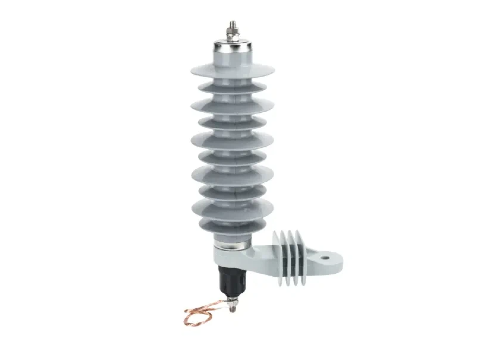
Power systems are designed to run within a stable voltage range, but real-world conditions are never perfectly stable. Lightning strikes, switching operations, insulation faults, and sudden load changes can all create overvoltage events that travel through electrical networks in an instant. When those events are not controlled, they can damage transformers, switchgear, cables, metering devices, and sensitive end-use equipment.
That is exactly why surge arresters matter. In our daily work in the power industry, we see surge protection as one of the most practical and cost-effective ways to improve system reliability. A surge arrester does not stop a surge from existing, but it gives that excess energy a safer path and keeps the protected equipment from bearing the full impact.
Electrical equipment is designed to withstand a certain rated voltage and limited temporary overvoltage. However, surge events can be fast and steep, often exceeding normal operating levels. Even brief events can damage insulation, degrade materials, or cause immediate failure.
In transmission and distribution systems, overvoltage can result from lightning strikes, switching operations, or internal surges like motor starts. These transient events can lead to downtime, costly maintenance, and safety risks, making surge arresters essential for protecting power systems.
A surge arrester is a protective device installed between a conductor and ground. Under normal conditions, it acts as an insulator, allowing only minimal leakage current. When voltage rises above a safe level, the arrester quickly becomes conductive, diverting the surge to the ground.
After the transient event passes and the voltage returns to normal, the arrester returns to its high-resistance state. Most modern surge arresters use metal oxide varistor (MOV) technology, known for its fast response, strong energy-handling capacity, and reliable protection.
The easiest way to understand the operating principle is to imagine a pressure relief path in a pipeline. Under normal pressure, the path stays closed. When pressure suddenly becomes too high, the path opens and redirects the excess so the main equipment is not damaged.
A surge arrester works in a similar way, but with voltage and current instead of pressure and fluid.
When the power system is running normally, the surge arrester sees the system voltage but does not conduct significant current. Its internal resistance is very high, so it effectively remains out of the circuit from an operational standpoint. The protected equipment continues to receive normal service voltage, and the arrester does not interfere with standard performance.
When a lightning impulse or switching surge arrives, the voltage rises very sharply. At this moment, the arrester senses the abnormal increase and its internal characteristics change almost immediately. The resistance drops dramatically, allowing surge current to pass through the arrester to ground.
This is the critical protective action. Instead of the overvoltage appearing across transformer insulation, cable terminations, metering circuits, or control devices, the arrester clamps the voltage to a safer level and diverts the energy away.
As soon as the transient energy disappears and the system voltage returns to normal, the arrester restores its high-resistance condition. The conductive path effectively closes again. This automatic transition is what makes the device so effective. It does not need manual operation, and it can respond in fractions of a second whenever a dangerous surge appears.
The process can be summarized like this:
Operating stage | What happens inside the surge arrester | Main purpose | Result for protected equipment |
Normal voltage | Arrester remains in high-resistance state with minimal leakage current | Avoid affecting normal system operation | Equipment runs normally |
Surge begins | Voltage rises rapidly above protective threshold | Detect abnormal overvoltage condition | Equipment is shielded from direct surge stress |
Conduction phase | Internal resistance drops and surge current is diverted to ground | Release excess energy safely | Voltage across equipment is limited |
Post-surge recovery | Arrester returns to insulating state after transient passes | Restore normal standby condition | System continues operating with protection ready for the next event |
Although different designs exist, most modern surge arresters rely on a few key principles and materials.
In many modern designs, the heart of the arrester is the metal oxide varistor block. This material has a highly nonlinear voltage-current characteristic. That means it behaves one way at normal voltage and a very different way at surge voltage.
At normal system voltage, the MOV block resists current flow. When voltage rises beyond a certain level, the MOV becomes much more conductive. This is what allows the arrester to clamp the overvoltage and divert the surge current. The faster and more consistently this happens, the better the arrester protects nearby equipment.
The outer housing protects the internal components from moisture, contamination, mechanical stress, and environmental aging. Depending on the design, the housing may be made from porcelain or polymeric materials. In many modern outdoor installations, polymer-housed arresters are popular because they are lightweight and perform well in polluted environments.
A good surge arrester is more than just a varistor block inside a tube. Proper sealing, pressure relief design, mechanical strength, and moisture control all matter. If internal components are exposed to humidity or contaminants over time, performance can decline. That is why manufacturing quality and design discipline are so important in long-term field applications.
The arrester only works properly if the diverted surge current can flow efficiently into ground. A poorly designed or high-resistance grounding path reduces protection effectiveness. In practical installations, we always pay close attention to grounding conductors, lead length, routing, and connection quality, because even a good arrester can underperform if the grounding system is weak.
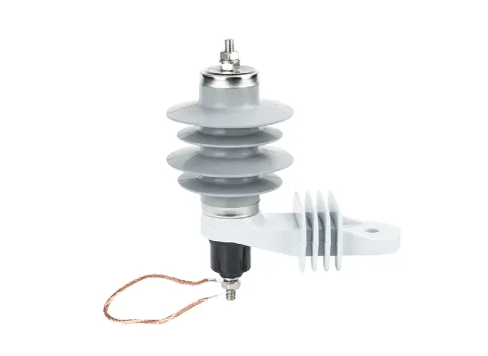
One of the most important concepts in surge protection is clamping voltage. This is the approximate voltage level at which the arrester limits the surge seen by the protected equipment.
No arrester keeps the voltage at exactly normal operating level during a transient. Instead, it reduces the peak to a level the equipment can better withstand. For example, if a surge would otherwise rise to a destructive value, the arrester may clamp it to a much lower, manageable level for a very short duration.
This is why arrester selection must match the insulation level and operating voltage of the system. If the protective level is too high, the equipment may still be stressed. If the rating is chosen incorrectly on the low side, the arrester may operate too often or suffer premature aging.
Surge arresters are used across many different parts of the power network. Their exact form and rating depend on the application.
In substations, they are commonly installed near transformers, circuit breakers, busbars, and incoming or outgoing line terminations. On distribution lines, they help protect pole-mounted transformers and downstream equipment from lightning-induced surges. In industrial plants, they may be used to protect motors, drives, capacitor banks, and sensitive control systems. In renewable energy systems, they are also important around inverters, combiner boxes, and collection circuits where transient events can affect both power and electronic control components.
Although the working principle stays similar, the selection criteria change with voltage class, environment, fault level, contamination conditions, and grounding practices.
Older surge protection designs often used silicon carbide elements together with spark gaps. Those designs played an important role historically, but they generally had more complex operating behavior. Modern metal oxide surge arresters are often preferred because they provide gapless or simplified protection characteristics with fast response and good performance under repeated surge conditions.
From our perspective, the shift to modern metal oxide technology has greatly improved the reliability and consistency of surge protection in many applications. It has also made arrester coordination with insulation systems more practical and predictable.
A surge arrester plays a critical role in protecting electrical equipment from the damaging effects of transient overvoltage, such as lightning strikes or switching surges. It operates by diverting excessive voltage to the ground and limiting the voltage exposure to the protected equipment, ensuring their longevity and operational stability.
Choosing the right surge arrester, understanding its working principle, and ensuring proper installation and maintenance are essential to maintaining a reliable power system. For more insights into surge protection solutions, consider reaching out to Zhejiang Langao Power Technology Co., Ltd. to explore their expertise in this vital aspect of power system reliability.
Q: What is a surge arrester?
A: A surge arrester is a protective device that diverts excess voltage caused by lightning or switching surges to the ground, protecting electrical equipment from damage.
Q: How does a surge arrester work?
A: A surge arrester remains non-conductive during normal voltage conditions. When overvoltage occurs, it becomes conductive and diverts the surge current to the ground, preventing equipment from being damaged.
Q: Where should a surge arrester be installed?
A: A surge arrester should be installed as close as possible to the equipment it protects, with a short and effective ground path to ensure optimal protection.
Q: What happens if a surge arrester is not properly maintained?
A: If a surge arrester is not maintained or inspected regularly, it can become less effective over time, potentially leading to equipment damage during a surge event. Regular checks and proper installation are crucial for its reliability.


