


Address
Nanzhai village, Liushi Town, yueqingCity, zhejiang Province, china
Tel
+86-13375775325
Views: 0 Author: Site Editor Publish Time: 2026-01-12 Origin: Site

In high‑voltage electrical systems, insulation plays a critical role in ensuring the safe and reliable transmission and distribution of electricity. As electrical infrastructure grows in scale and complexity, conventional insulation materials such as porcelain and glass are increasingly challenged by environmental stressors, mechanical loads, and pollution conditions. Enter the composite insulator — a modern, engineered solution that has reshaped grid design worldwide.
Composite insulators (often referred to as polymer insulators or silicone insulators) combine advanced polymers with reinforcing materials to deliver superior electrical insulation, mechanical strength, and environmental resistance. These insulators are now widely used on high‑voltage transmission lines, substations, distribution networks, and specialized systems like railway electrification.
This article offers a comprehensive, multi‑dimensional review of composite insulators — from material science and performance evaluation to installation, maintenance, and future trends.
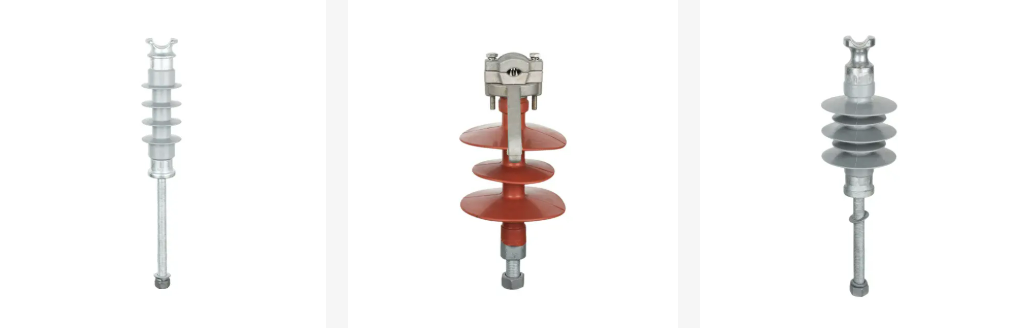
At the heart of every composite insulator lies a careful balance of electrical, mechanical, and environmental performance, achieved through smart material design.
The core of a composite insulator is typically a glass fiber reinforced polymer (FRP). This material combines glass fibers with epoxy resin in a pultruded rod, which delivers high tensile strength and excellent mechanical stability under load.
Unlike traditional solid porcelain rods, FRP cores offer a high strength‑to‑weight ratio, which enables composite insulators to support heavy conductors and withstand dynamic loads such as tension, vibration, ice, and wind.
Surrounding the core is a polymer housing, usually made of silicone rubber or similar elastomeric materials. This housing serves as the primary electrical insulator and environmental shield. Silicone rubber is widely recognized for its:
High dielectric strength and resistance to electrical tracking.
Hydrophobic (water‑repellent) surface, reducing contamination and flashover risk.
UV resistance, ensuring long‑term outdoor durability.
Thermal stability, enabling reliable operation across wide temperature ranges.
The polymer housing also incorporates sheds or skirts that increase the creepage distance — the surface path over which leakage current would travel — thereby enhancing insulation performance under wet or polluted conditions.
Composite insulators include robust metal end fittings, typically made from galvanized steel or aluminum alloys, securely bonded to the core. These fittings transmit mechanical loads to towers and supporting structures while providing strong attachment points for conductors.
This combination of FRP core, polymer housing, and metal fittings forms a highly effective composite structure capable of delivering both electrical insulation and mechanical support.
Composite insulators have earned global acceptance not just for their innovation but for measurable performance advantages across multiple engineering indicators.
Composite insulators excel in mechanical strength due to the FRP core, which can resist significant tensile loads without cracking or breaking — a stark contrast to ceramic insulators that are brittle and prone to fracture under impact.
This mechanical resilience allows composite insulators to perform reliably even in rugged outdoor conditions where ice loading, strong winds, or seismic activity might otherwise compromise insulation integrity.
The silicone rubber housing used in composite insulators exhibits excellent dielectric properties, reducing the likelihood of leakage currents and surface flashovers under stress.
Crucially, the hydrophobic nature of silicone rubber improves performance in wet or polluted environments, where water bridges and contaminants might cause traditional insulators to fail.
Composite insulators have demonstrated exceptional resistance to natural aging factors such as UV radiation, moisture, temperature cycling, and pollution. Unlike ceramic insulators, which can absorb water and develop surface conductive films, silicone‑based insulators maintain surface integrity and performance longer in challenging climates.
This durability translates into longer service life and reduced need for maintenance, particularly in coastal, industrial, or high‑pollution regions.
Understanding how composite insulators behave over time is essential for grid planners and engineers.
Polymeric materials can degrade over time due to environmental exposure, mechanical stress, or electrical stress. Studies show that surface hydrophobicity — a key benefit of silicone housings — may diminish slightly over decades but generally retains performance better than brittle ceramic counterparts.
However, core materials like epoxy‑based FRP can undergo wear if moisture penetrates the housing or mechanical fatigue accumulates, making quality manufacturing and sealing techniques critical for reliability.
Potential failure mechanisms often occur at interfaces — such as between the core and housing, or housing and end fittings — rather than within the insulating materials themselves. Proper bonding, protective coatings on metal parts, and design considerations help minimize such risks.
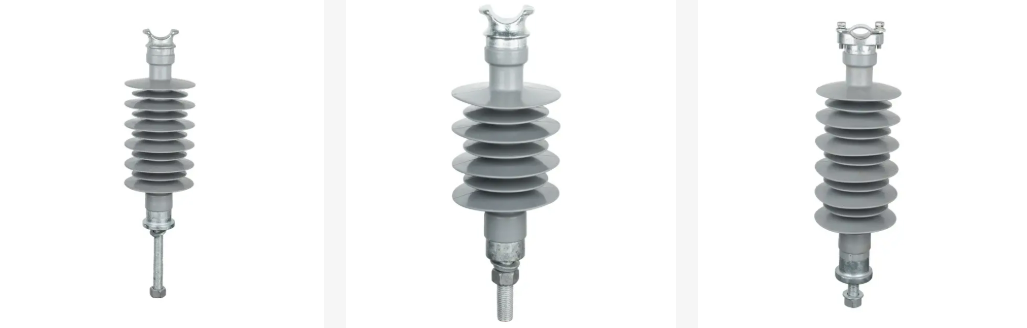
The lighter weight of composite insulators — often up to 70–90% lighter than porcelain alternatives — significantly reduces transportation and installation costs.
Field crews can handle composite insulators with less heavy equipment, and installation times are faster, lowering overall project labor costs.
Thanks to their hydrophobic surfaces and environmental resistance, composite insulators require less frequent cleaning or maintenance over their operational life compared to ceramic or glass insulators.
This reduction in maintenance frequency translates into lower operational expenditure and fewer service interruptions.
When evaluating total lifecycle costs — including installation, maintenance, downtime risks, and replacement — composite insulators often outperform traditional options despite a higher initial price. Their extended service life and reduced failure rates contribute to long‑term financial benefits.
Composite insulators are used widely across different segments of electrical infrastructure:
In HV and UHV (ultra high voltage) transmission lines, composite insulators support conductors over long distances while resisting environmental stress and mechanical loads.
They are used in substations for insulating bus bars, switchgear components, transformers, and other critical equipment due to their compact form and robust performance.
In railway systems and transport electrification projects, composite insulators offer reliable insulation and longevity, making them ideal for overhead contact lines and tension systems.
Composite insulators must meet strict international standards — such as IEC, ANSI, and national electrical codes — to ensure safety, reliability, and performance. These standards define electrical, mechanical, and environmental testing protocols that products must pass before deployment.
Testing includes assessments of:
Dielectric withstand and flashover voltage
Mechanical load tolerance
Pollution and weather resistance
Long‑term aging performance
These comprehensive tests confirm that composite insulators are fit for service in demanding electrical environments.
As grid requirements evolve, so too does composite insulator technology. Emerging research focuses on:
Incorporating nano‑fillers or hybrid reinforcement into silicone or polymer matrices to improve dielectric strength, tracking resistance, and longevity.
Embedding sensors within composite insulators for real‑time performance monitoring, enabling predictive maintenance and grid resilience.
Tailoring polymer formulations to resist specific environmental stressors such as extreme cold, desert heat, or salt spray environments.
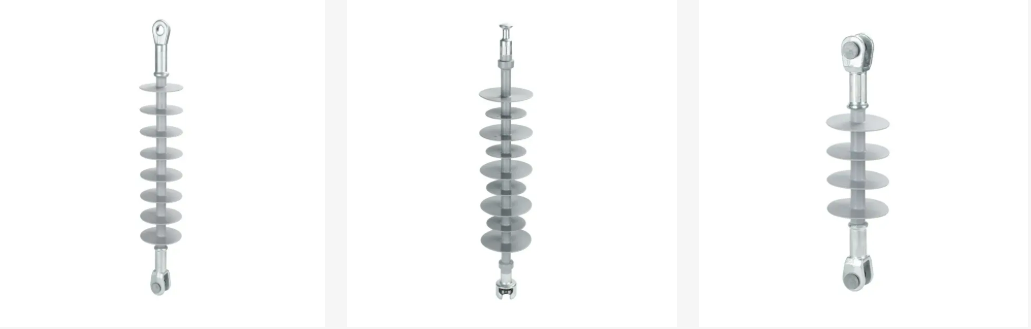
Today’s electric grids demand insulators that are lightweight, durable, versatile, and low‑maintenance — qualities that composite insulators deliver across the board. Their superior performance over traditional materials has made them a cornerstone of modern transmission and distribution systems, powering everything from rural substations to electrified high‑speed rail lines.
For project planners and utilities seeking performance, safety, and long‑term cost efficiency, composite insulators — whether in suspension, pin, post, or specialized configurations — represent a forward‑looking solution that meets the evolving needs of global power infrastructure.
Zhejiang Langao Power Technology Co., Ltd. is a seasoned manufacturer of high‑quality composite insulators and related high‑voltage electric power equipment. With a full range of composite insulation solutions — from 11kV to 800kV grades — Langao Power delivers advanced polymer insulators tailored for diverse applications including transmission lines, substations, railway electrification, and industrial installations.
Langao Power’s products feature premium silicone housings, robust FRP core rods, and precision end fittings that comply with IEC, ANSI, and other international standards. Backed by comprehensive testing and stringent quality control systems, these composite insulators combine reliability, mechanical strength, and environmental resilience to support utilities around the world. Contact Langao Power today for customized high‑performance composite insulator solutions designed to meet your project’s specifications.
1. What exactly is a composite insulator?
A composite insulator is a high‑voltage electrical insulator made of a reinforced core (usually glass fiber composite) and a polymer housing (often silicone rubber) that provides excellent insulation and weather resistance in power systems.
2. How do composite insulators differ from polymer or silicone insulators?
“Composite insulator” is a broad term that includes designs using reinforced cores with polymer housings. Polymer insulator emphasizes the polymer component, and silicone insulator highlights the silicone material used in the housing. All terms describe similar modern non‑ceramic insulators with slight emphasis differences.
3. Why are composite insulators preferred over traditional porcelain or glass insulators?
Composite insulators are lighter, have better pollution and environmental resistance, lower maintenance needs, and superior mechanical performance, making them ideal for modern transmission and distribution systems.
4. What applications are composite insulators used for?
They are widely used in high‑voltage transmission lines, substations, distribution networks, railway electrification, and industrial electrical systems due to their reliability and performance.
5. How long do composite insulators typically last?
With proper design and quality manufacturing, composite insulators commonly provide 30 years or more of service life under normal operating conditions.


