


Address
Nanzhai village, Liushi Town, yueqingCity, zhejiang Province, china
Tel
+86-13375775325

| Quantity: | |
|---|---|
Introduction:
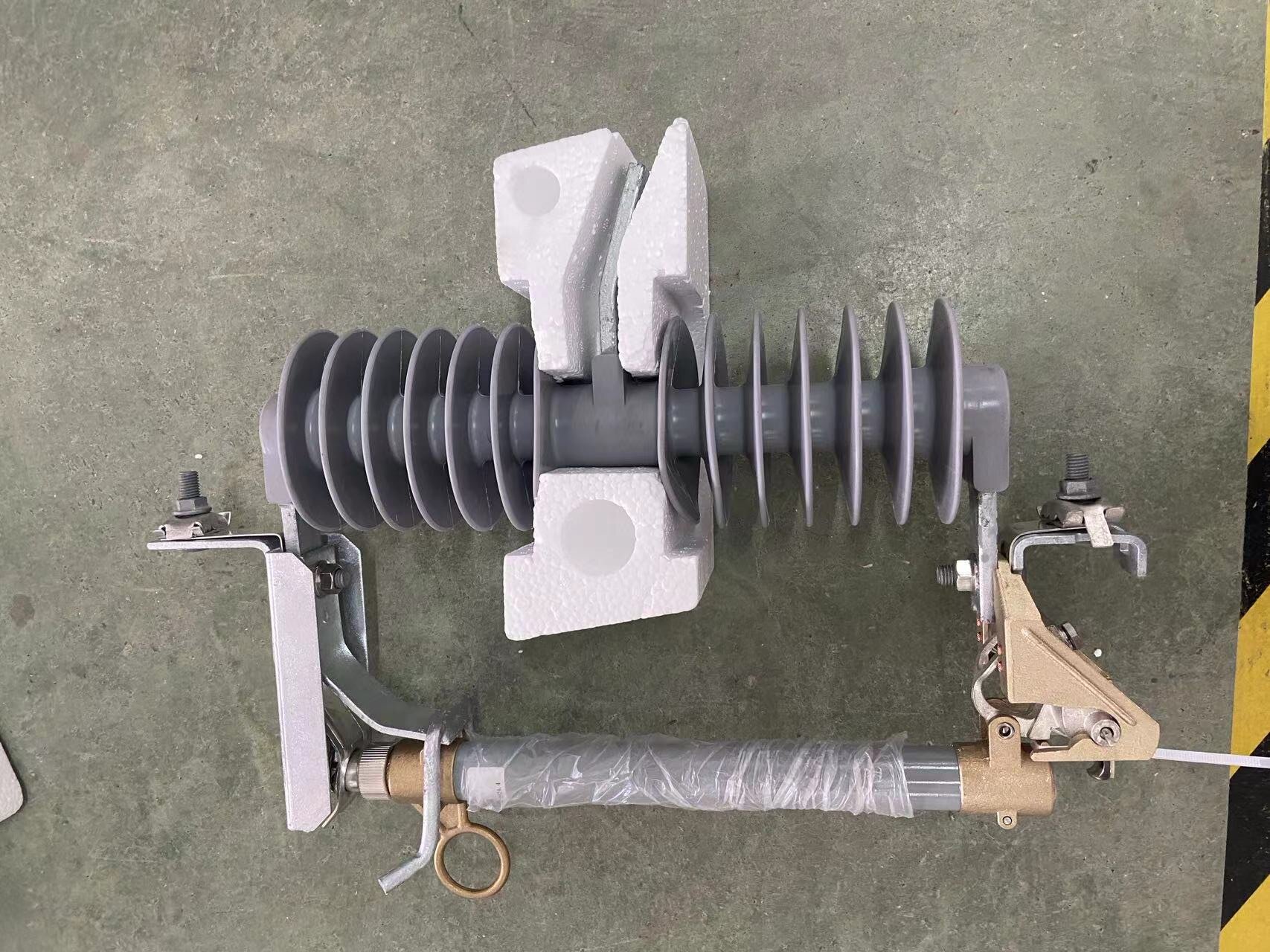
This 24kV, 100A drop-out fuse cutout is a robust and reliable device designed for medium-voltage networks. Its silicone rubber insulator with 14 sheds and a 660mm creepage distance makes it particularly suitable for areas with high pollution levels. The combination of a high 10kA breaking capacity and the clear visual drop-out indication ensures both safety and operational efficiency for utility systems.
Drawings:
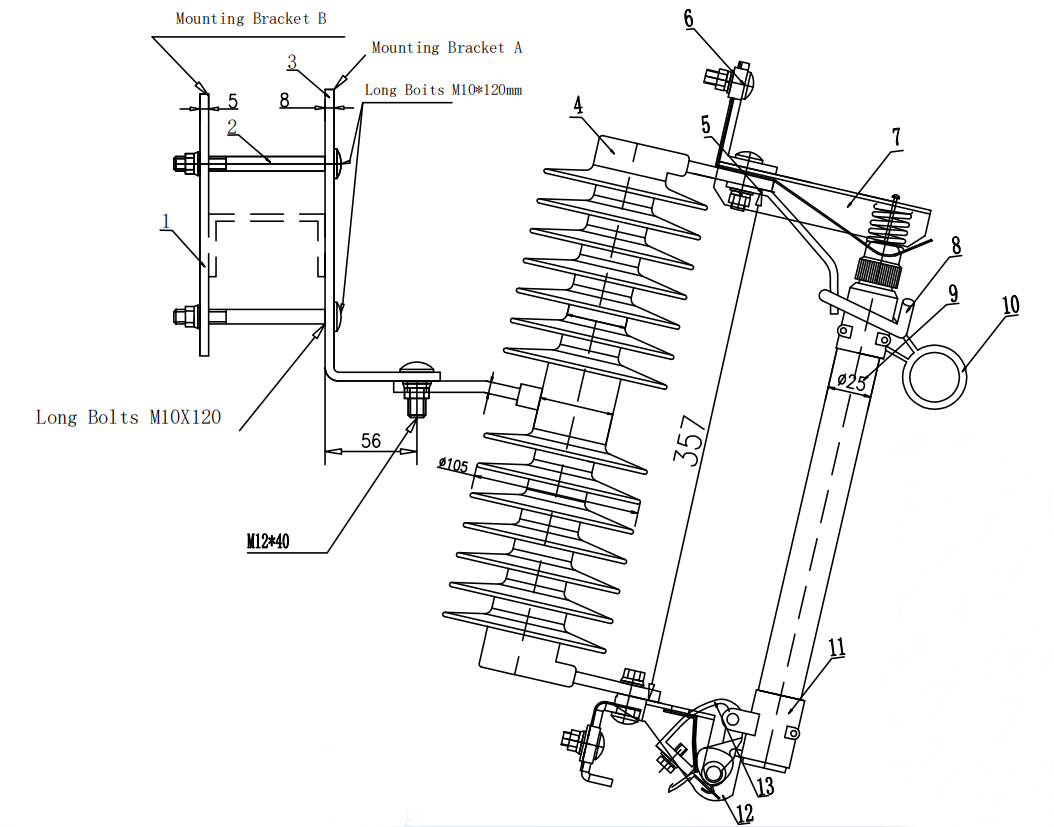
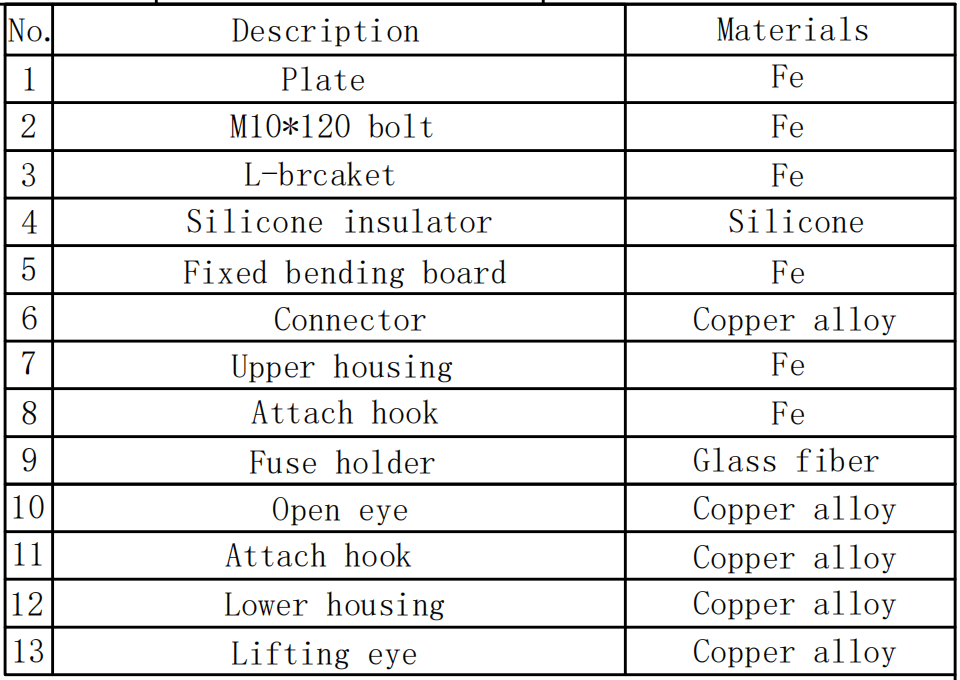
Specifications:
Product Type: | HRW12-24-100A-660mm |
Body: | silicone |
Rated voltage: | 24kV |
Maximum equipment voltage: | 27kV |
Rated frequency: | 50Hz |
Power frequency withstand voltage(1 min): | -phase to earth: 65kV - across isolating distance: 70kV |
Impulse withstand voltage(1.2/50us, dry): | -phase to earth: 150kV - across isolating distance: 160kV |
Rated current: | 100A |
Breaking current: | 10kA |
Leakage distance: | 660mm |
Weight: | 6kgs |
Dimensions: | 510x400x145mm |
Standard: | IEC 60282-2 |
Key Electrical Specifications:
Rated Voltage (Um): 24 kV
Rated Current (Iu): 100 A
Breaking Capacity (Interrupting Rating): 10 kA. This signifies the fuse's ability to safely interrupt fault currents up to 10,000 Amperes.
Creepage Distance: 660 mm. This substantial leakage distance along the insulator surface ensures high resistance to tracking and flashover, even in polluted or humid environments (e.g., coastal, industrial areas).
Insulator Design and Material:
Material: The main insulator is manufactured from Silicone Rubber. This material offers excellent hydrophobic properties (water repellency), resistance to UV degradation, and high tracking resistance.
Color: Grey.
Umbrella Shed Design: The insulator features 14 precisely designed sheds (umbrellas). This configuration is critical as it:
Creates a long, protected leakage path for current (660mm creepage distance).
Prevents moisture accumulation by allowing water to drip off cleanly.
Enhances performance in adverse weather conditions like rain, snow, and pollution.
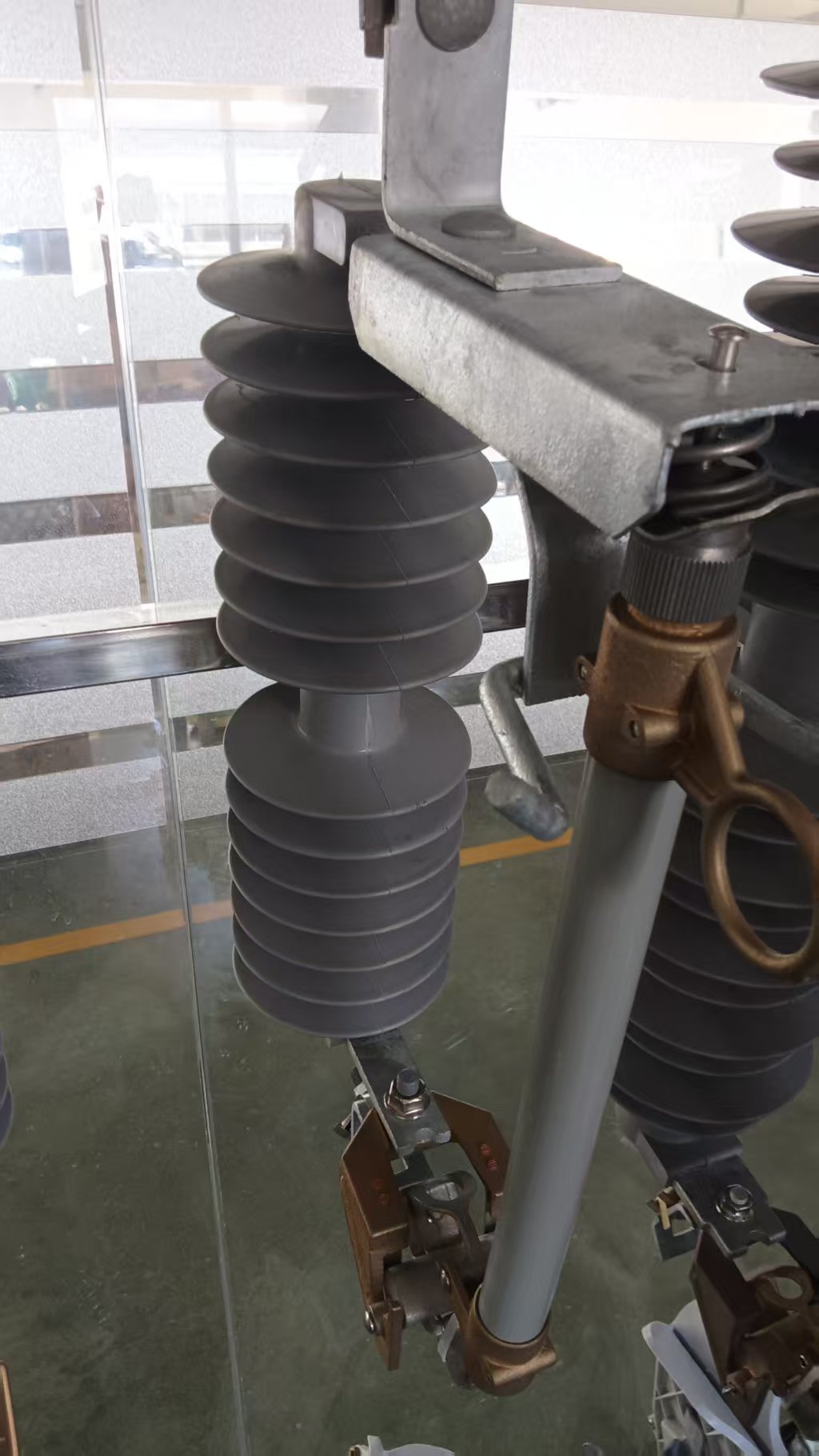
Physical Description & Key Components:
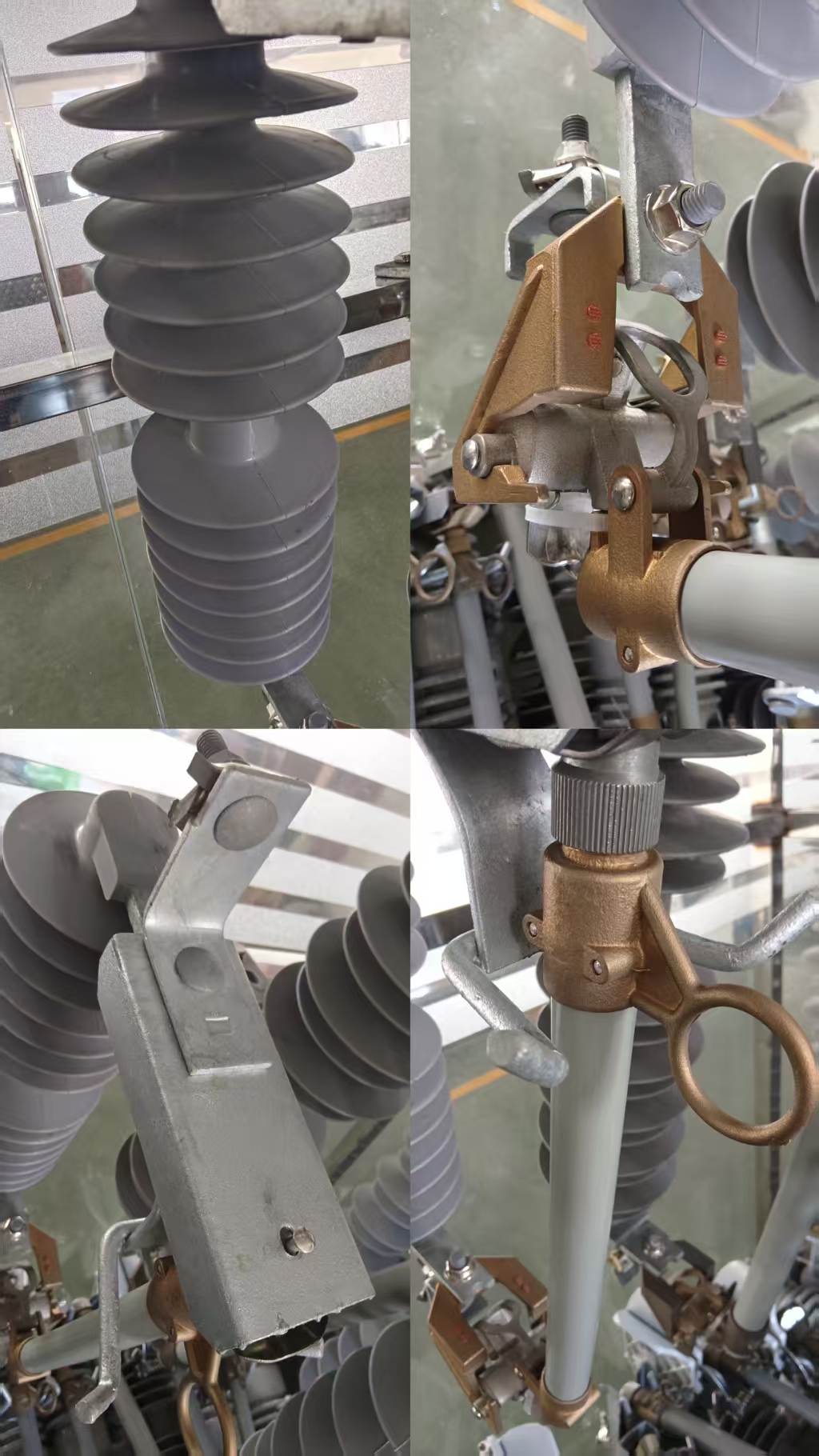
Central Insulator Column: A grey silicone rubber insulator with a ribbed texture stands vertically as the core structural and insulating component.
Top Assembly: A horizontally mounted metal (typically aluminum alloy) cap at the top contains the arcing chamber and provides the upper electrical contact point.
Fuse Carrier / Tube: A cylindrical metal tube (visible in a brass/bronze tone) extends downward from the top assembly. This tube houses the fuse element and is designed to pivot.
Lower Assembly & Drop-Out & Mechanism: A sturdy metal lever mechanism at the bottom is engineered to release the fuse tube when the fuse element melts due to an overcurrent. This causes the tube to pivot downward and hang visibly, providing a clear mechanical indication that the fuse has operated (hence the name "drop-out").
Terminals: The upper and lower terminals (with clamping hardware) are designed for secure connection to the overhead power conductors.
Application Scenarios:
This 24kV, 100A drop-out fuse is a versatile component widely used in various scenarios within public and industrial power distribution systems:
Distribution Transformer Protection: Its primary application is to protect pole-mounted distribution transformers (e.g., 24kV/400V). It safeguards the transformer from damage caused by internal faults or overloads, preventing more extensive outages and expensive repairs.
Line Sectionalizing: It is installed at strategic points along overhead distribution lines to divide the network into sections. If a fault (e.g., a fallen tree limb) occurs on one section, only the fuse protecting that section operates. This isolates the fault while minimizing power disruption to customers on upstream and other healthy sections of the line, improving the overall reliability of the power supply.
Switching Device: It can also be used as a convenient and visible point to manually disconnect a circuit (like a transformer or a capacitor bank) for maintenance, using an insulated operating hook.
Ideal for Moderate Environments: The silicone rubber insulator and 660mm creepage distance make this fuse well-suited for applications in:
Residential and Commercial Areas: Protecting transformers that supply power to neighborhoods and shopping districts.
Small Industrial Plants: Providing overcurrent protection for dedicated service lines.
Rural and Suburban Overhead Lines: Where environmental pollution is typically low to moderate.

Company Strength:
 |  |
 |  |
 |  |  |
 |  |  |


