


Address
Nanzhai village, Liushi Town, yueqingCity, zhejiang Province, china
Tel
+86-13375775325

| Quantity: | |
|---|---|
Product Introduction:
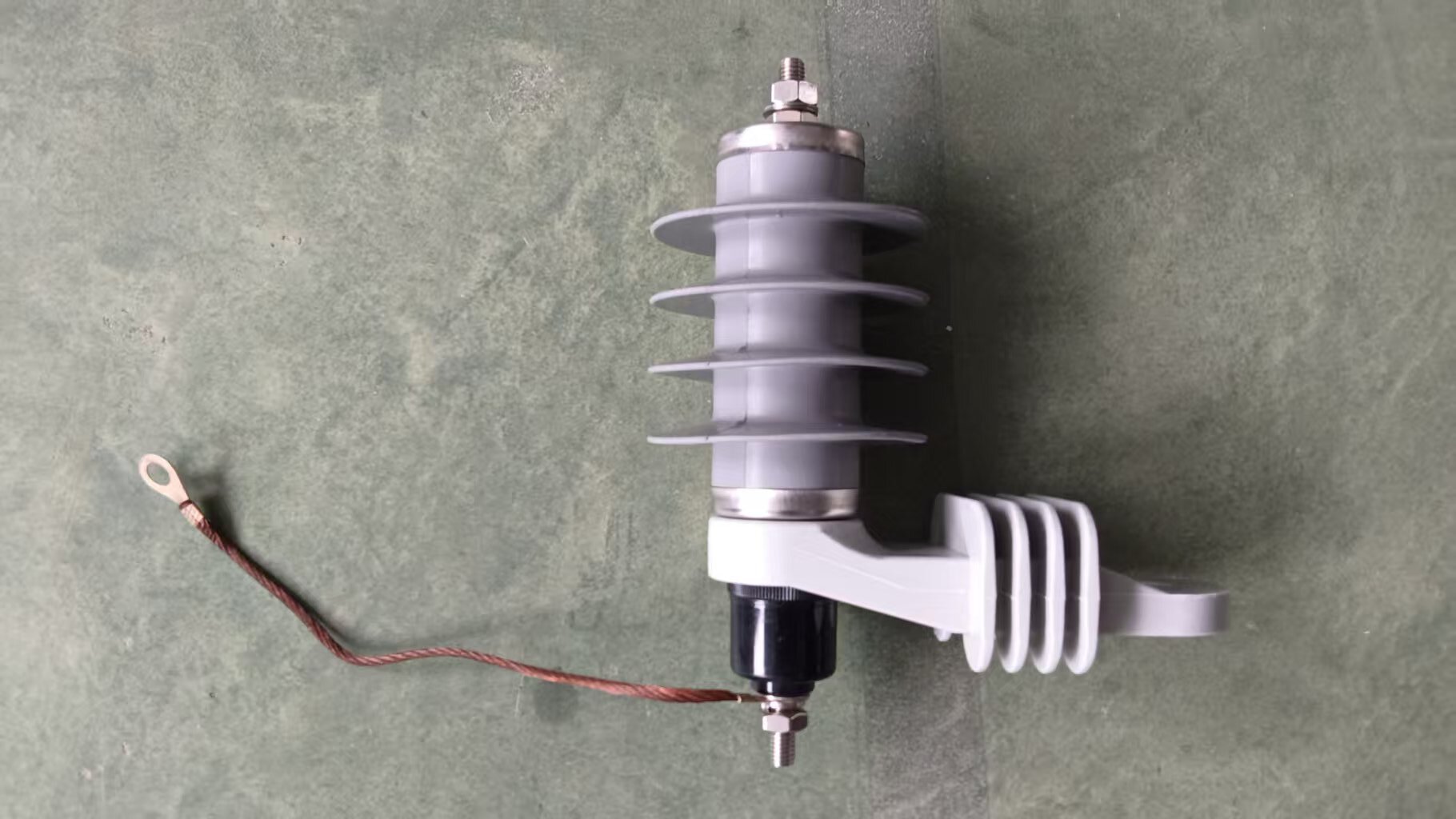
This is a modern 12kV, 10kA polymer surge arrester. It is a critical protective device used in electrical power systems to safeguard equipment like transformers, switchgear, and cables from damaging transient overvoltages. These overvoltages are typically caused by lightning strikes or switching operations within the grid. Rated for systems with a nominal voltage of up to 12 kilovolts (kV), this arrester is engineered to safely divert massive surge currents—exceeding 10 kiloamperes (kA)—to the ground, thereby preventing insulation failure and equipment damage.
Drawings:
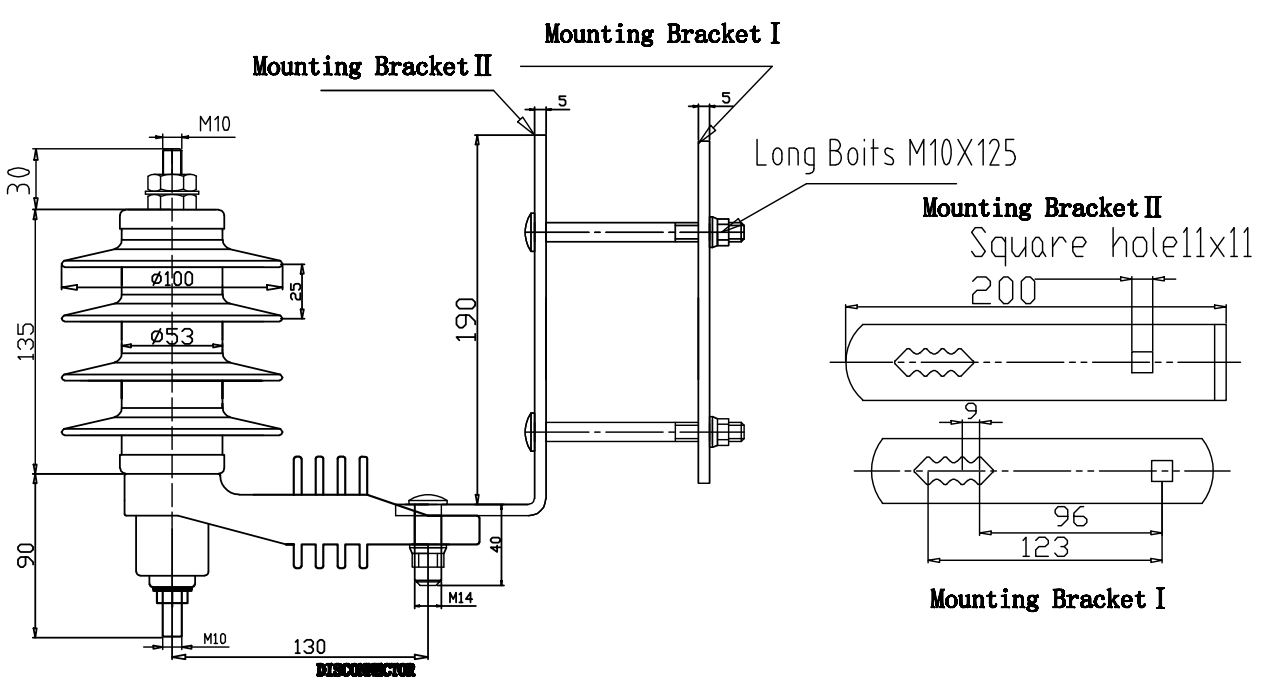
Technical Parameters:
Rated voltage: | 12kv |
Norminal discharge current: | 10kA |
Maximum continuous operating voltage (MCOV): | 10.2kv |
1/4µs steep current residual voltage: | 42.2kv |
8/20µs lightning current residual voltage : | 36kv |
30/60µs switching current residual voltage: | 27.0kv |
2000µs rectangular wave current impulse: | 250A |
4/10µs high current withstand discharge capacity : | 100KA |
Discharge classic: | 1 |
Creepage distance: | 285mm |
Construction:
This oxide zinc surge arrester's construction is optimized for reliability and performance:
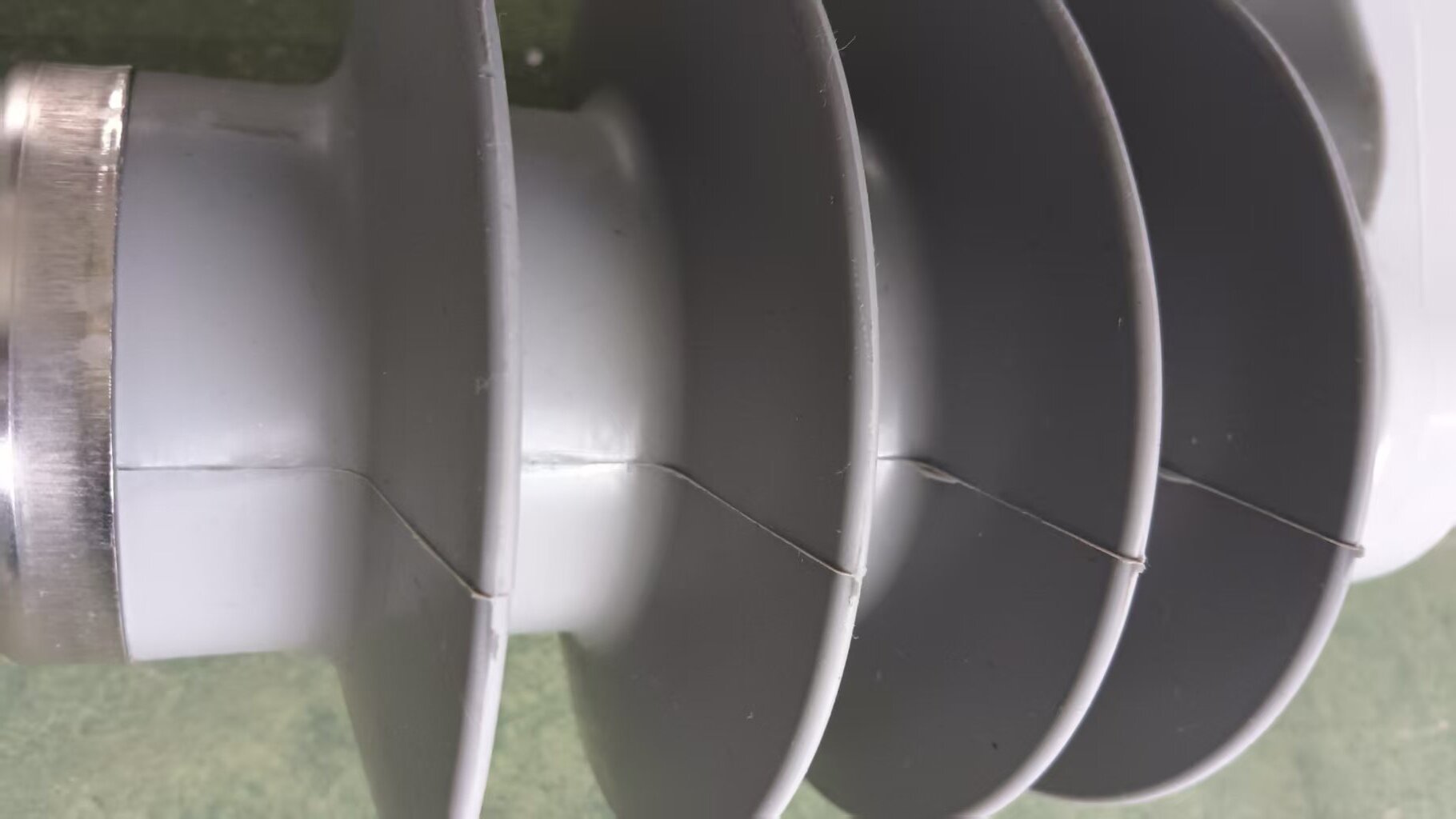
Polymeric Housing: The main body is made of a gray silicone rubber or EPDM polymer. This material is lightweight, highly durable, and offers excellent pollution resistance.
Four-Ribbed (Umbrella-type) Design: The housing features four distinct, disc-shaped sections known as "sheds." This specific design is not merely structural; it is engineered to maximize the creepage distance (285mm). The sheds prevent the formation of a continuous conductive path for leakage currents across the surface, which is crucial for performance in humid, polluted, or rainy conditions.
Internal Metal Oxide Varistor (MOV) Core: Inside the polymer housing lies the core component—a stack of Zinc Oxide (ZnO) varistor discs. These discs have a highly non-linear voltage-current characteristic. Under normal voltage, they act as an insulator, but when a surge exceeds a specific threshold, their resistance drops instantaneously, allowing them to channel the surge current to ground.
Terminals and Fittings:
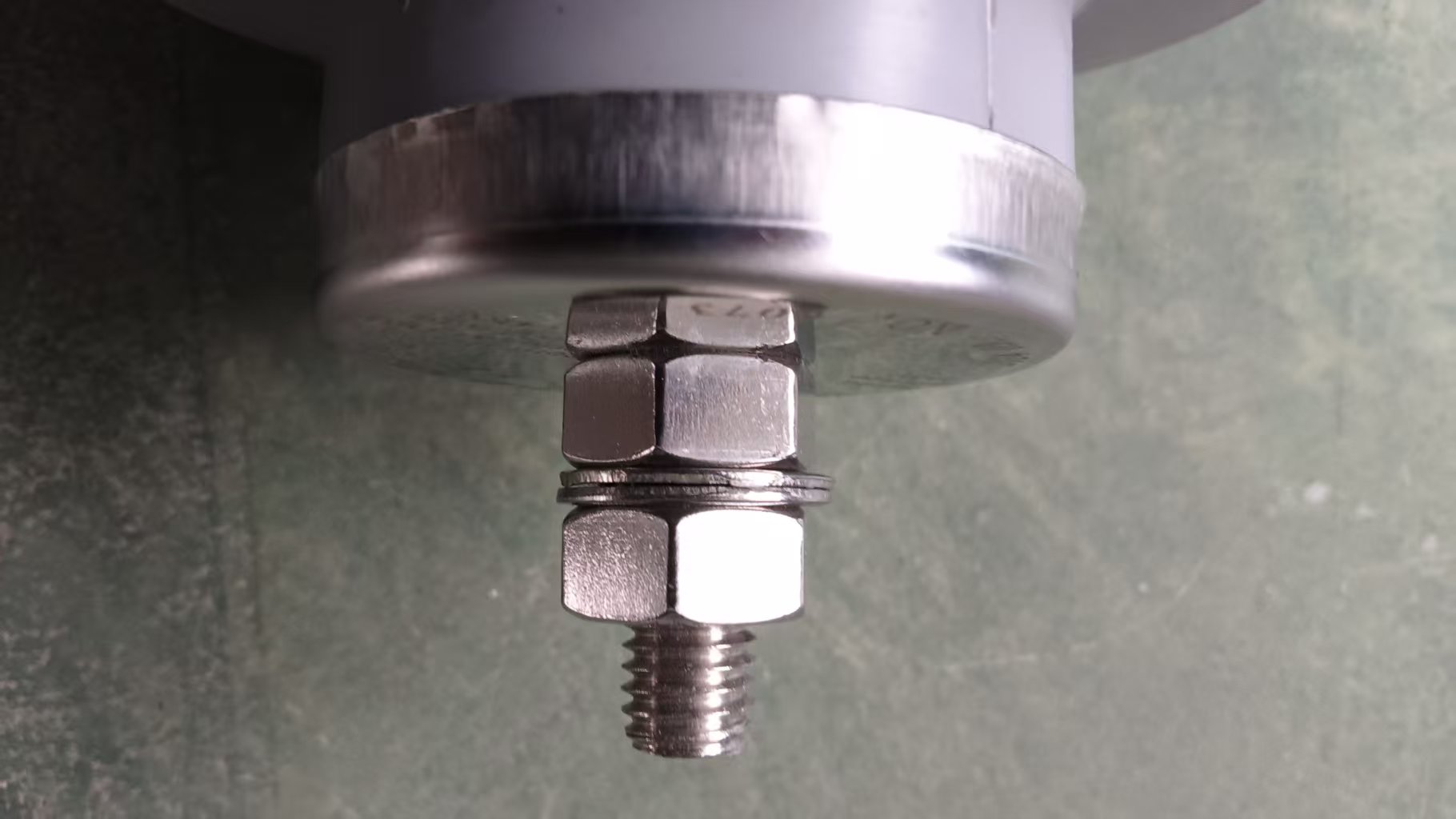
Top Terminal: A metallic cap with a threaded stud and hexagonal nuts provides the connection point for the high-voltage line conductor.
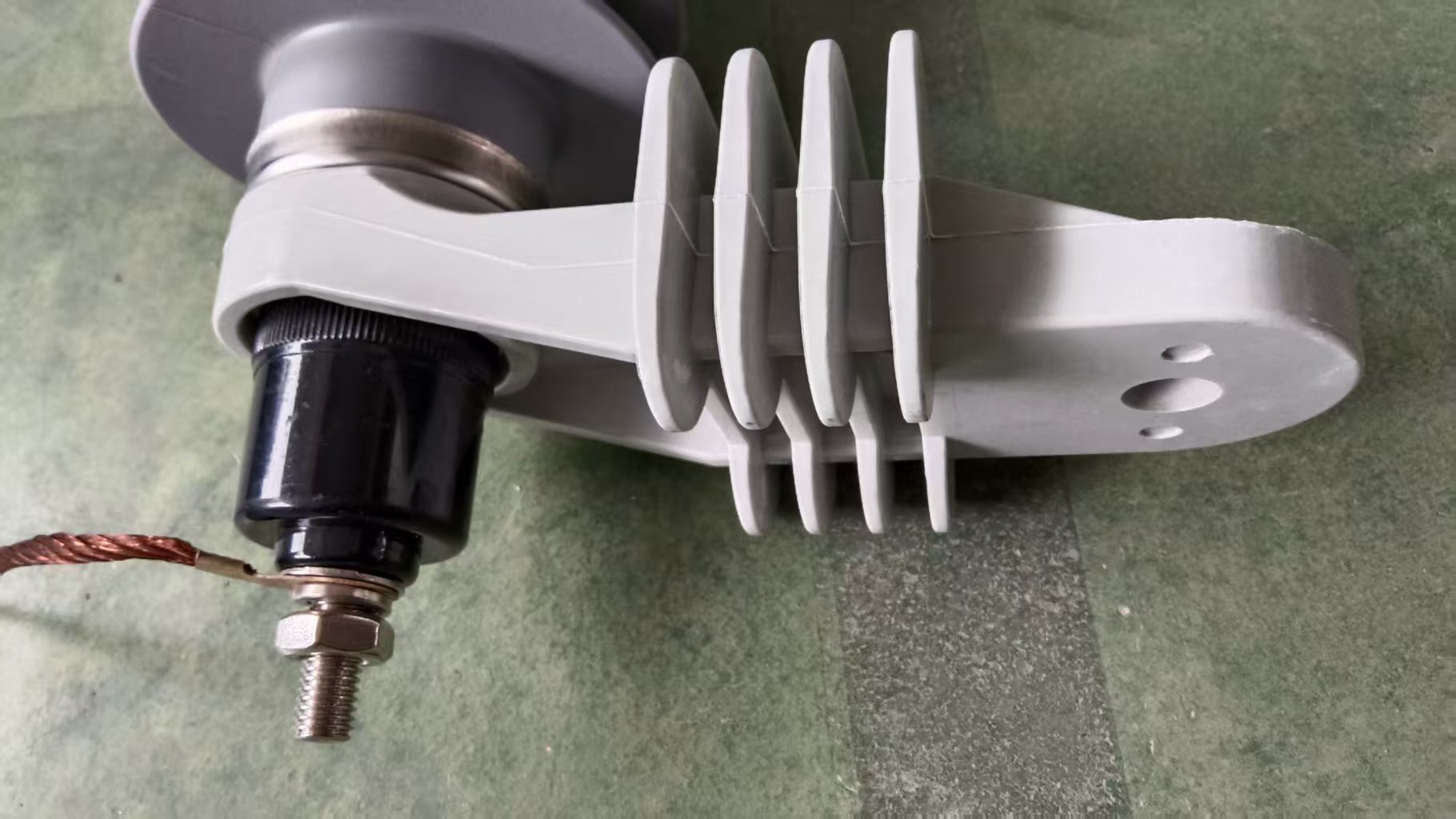
Grounding Connection: The bottom of the arrester is equipped with a short, bare copper grounding wire, bent into a loop, ready for connection to the earth grid.
Mounting Bracket: A horizontally extending bracket with cooling ribs allows for secure mechanical attachment to a structure, busbar, or pole. The ribs aid in heat dissipation.
Key Features:
High Pollution Performance: The 4-ribbed design and hydrophobic nature of the polymer material ensure reliable operation even in areas with high levels of dust, salt, or industrial pollution.
Compact and Lightweight: Compared to traditional porcelain arresters, this polymer type is significantly lighter and more compact, simplifying transportation and installation.
Excellent Energy Handling Capability: The internal ZnO varistors can absorb and dissipate the high energy of 10kA surge currents effectively.
Safety and Reliability: Polymer-housed arresters are designed for fail-safe operation. They offer high mechanical strength and are resistant to vandalism and accidental impact.
Long Service Life: The robust construction and stable characteristics of the MOVs contribute to a long operational lifespan with minimal maintenance.
Production Process:
The manufacturing of this silicone surge arrester involves several precise steps:
MOV Disc Production: Zinc oxide powder is mixed with other metal oxides, pressed into disc shapes, and sintered at high temperatures to form the varistor blocks with their unique electrical properties.
Core Assembly: The individual MOV discs are stacked, compressed, and assembled with metal end electrodes to form the active core of the arrester.
Housing Molding: The polymer housing is created through an injection molding or transfer molding process. The core is placed in a mold, and liquid silicone rubber is injected under pressure, forming the distinctive gray, four-ribbed sheds around it in a single, seamless operation.
Curing and Vulcanization: The molded unit undergoes a curing process in a heated chamber to cross-link the polymer chains, giving the housing its final mechanical and electrical properties.
Assembly and Finishing: The top terminal, grounding wire, and mounting bracket are assembled. The unit is cleaned and prepared for testing.
Rigorous Quality Testing: Each arrester undergoes a series of electrical tests, including power frequency withstand voltage, impulse current discharge, and leakage current measurement, to ensure it meets all specified performance criteria.
Application Scenarios:
This type of high voltage surge arrester is versatile and used in various medium-voltage applications:
Electrical Distribution Networks: Protecting pole-mounted transformers, ring main units (RMUs), and compact substations on utility poles and in distribution substations.
Industrial Facilities: Shielding critical machinery such as motors, generators, and capacitor banks within factories and industrial plants.
Commercial Buildings: Integrated into electrical systems to protect infrastructure like large HVAC units, elevator controls, and main switchboards.
Renewable Energy Systems: Essential for protecting inverters and transformers in solar farms and wind power installations, which are often exposed to lightning.
Harsh Environments: Its excellent pollution performance makes it particularly suitable for coastal areas, marine applications, and regions with heavy industrial pollution.

Company Strength:
 |  |
 |  |
 |  |  |


