Address
Nanzhai village, Liushi Town, yueqingCity, zhejiang Province, china
Tel
+86-13375775325
Views: 0 Author: Site Editor Publish Time: 2026-09-01 Origin: Site

Grid failures drain utility budgets by billions of dollars every single year. Harsh weather events and unrelenting electrical stress expose structurally weak transmission lines daily. Have you ever witnessed the aftermath of a poor insulator choice? The results are brutal. Dangerous flashovers occur. Catastrophic power outages follow. Maintenance budgets spiral out of control. To stop these failures, modern infrastructure projects are rapidly pivoting away from legacy materials.
This comprehensive guide breaks down the critical architecture of overhead networks. We will look at various dielectric hardware options. Specifically, we will examine why polymeric materials secure reliable power transmission. We will also see how advanced composite solutions fundamentally transformed grid engineering.
Suspension insulators serve as the foundational support for overhead transmission lines. They deliver unparalleled mechanical flexibility and scalable insulation across diverse grid architectures.
Toughened glass and porcelain dominated utility inventories for decades. Today, composite materials dictate industry standards. Their drastically reduced weight and self-cleaning properties make them superior.
Demanding high-voltage applications require precision-engineered hardware. Tailored solutions are mandatory for maintaining system stability under extreme loads.
Mastering critical technical specifications empowers procurement teams. Understanding mechanical load limits and creepage distances leads to data-driven purchasing decisions that slash long-term operational costs.
To fully grasp the mechanics of modern power grids, one must first analyze the specialized components. These components keep energized conductor cables safely isolated from grounded steel tower structures. Suspension insulators execute this exact high-stakes role within high-voltage transmission networks.
Rigid pin-type insulators sit upright on a cross-arm. Suspension configurations take a completely different approach. They hang vertically downward, cradling the heavy power conductor at their lowest point. The foundational engineering concept relies on a modular string or a continuous long-rod design. By linking multiple dielectric units or deploying a single elongated composite rod, grid designers seamlessly scale the insulation capacity. This allows them to safely manage exponentially higher voltages. Ultimately, this vertical physical gap prevents lethal electrical currents from tracking back into the grounded infrastructure.
Implementing a suspended architecture yields distinct operational benefits for high-capacity networks. From a structural standpoint, the vertical orientation allows the entire assembly to articulate and sway with crosswinds. This dynamic flexibility absorbs and dissipates kinetic energy. It drastically minimizes the transverse mechanical sheer stress transferred to the transmission tower during hurricanes or severe winter storms.
Furthermore, these systems offer inherent scalability. If a utility needs to uprate a line capacity, crews can simply extend the string length. Economically, once system voltages surpass the 33kV threshold, traditional pin-type insulators become prohibitively massive and structurally unstable. Consequently, suspension assemblies provide a much leaner and robust solution for Extra-High Voltage and Ultra-High Voltage corridors.
The raw materials deployed in power delivery have experienced a radical technological metamorphosis over the last century. Tracking this historical progression clarifies exactly why contemporary grid operators rely almost exclusively on advanced synthetic polymers.
During the early stages of global electrification, kiln-fired porcelain and toughened glass were the only practical mediums available. These ceramics delivered excellent tracking resistance. They could theoretically endure decades of continuous electrical stress. Toughened glass offered a unique maintenance advantage. If a unit sustained internal damage, the entire disc would shatter explosively. This allowed helicopter patrol crews to instantly spot faulty strings from the air. However, both ceramic variants suffer from crippling logistical drawbacks. They are exceptionally heavy, notoriously brittle, and highly vulnerable to installation mishandling.
The late twentieth century triggered a massive shift. Polymeric insulation hit the market, and the utility sector aggressively transitioned to composite designs. The goal was to eradicate the weight penalties and pollution-induced flashovers native to ceramics. This engineering breakthrough centralized around a pultruded fiberglass reinforced plastic core capable of bearing massive tensile loads. A molded weather-shedding silicone rubber housing hermetically seals this core. The resulting product delivers unprecedented environmental resilience.
Performance Metric | Porcelain | Toughened Glass | Composite / Polymer |
|---|---|---|---|
Weight Profile | Extremely Heavy | Very Heavy | Ultra-Lightweight |
Pollution Resistance | Poor | Moderate | Exceptional |
Maintenance Needs | Frequent High-Pressure Washing | Visual Patrols Required | Virtually Zero Maintenance |
Installation Logistics | Requires Heavy Cranes | Requires Heavy Cranes | Manual Handling Possible |
When drafting procurement specifications for upcoming transmission expansions, lead engineers generally evaluate three primary material classifications. While legacy systems still operate globally, empirical performance data decisively steers modern purchasing toward synthetics.
Manufactured from a precise blend of clay, quartz, and alumina, porcelain is fired at extreme temperatures and finished with a protective glaze. Its primary advantage lies in its rigid durability and exceptional resistance to surface arcing in benign dry climates. Conversely, its massive density hyper-inflates freight and heavy-machinery installation costs. In practical terms, porcelain performs abysmally in coastal or heavily industrialized zones. This forces utilities to fund expensive routine washing operations to avert pollution flashovers.
Created through a specialized annealing process that forms a robust outer compressive layer, toughened glass boasts high dielectric strength. As previously noted, its shatter-upon-failure characteristic simplifies visual diagnostics. Unfortunately, glass shares the same burdensome weight profile as porcelain. In addition, its surface chemistry eagerly attracts morning condensation. This accelerates the formation of conductive moisture films that lead to leakage currents.
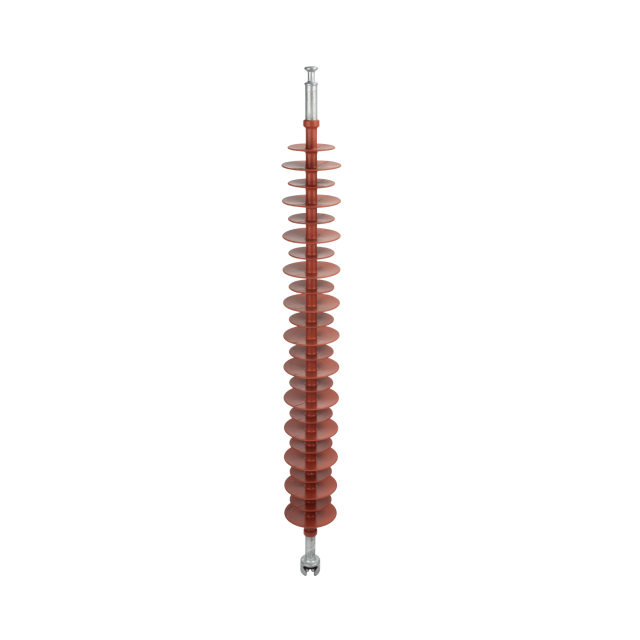
Representing the apex of transmission hardware, polymeric units fuse a tension core with galvanized metal end-fittings and a specialized silicone rubber shed profile. They weigh up to ninety percent less than equivalent ceramic strings. Beyond structural benefits, their defining feature is exceptional hydrophobicity. This innate ability to repel water renders them virtually immune to contamination-driven electrical faults.
Let us look at where the industry is heading. Recent global grid modernization initiatives show a clear trajectory for overhead line engineering. Climate change accelerates the frequency of extreme weather events, ranging from unprecedented ice storms to severe coastal hurricanes. Because of this, utilities are aggressively prioritizing grid resilience. There is a massive industry-wide push to retrofit aging 69kV and 115kV corridors to higher capacities. These upgrades allow grids to handle the bidirectional power flows generated by newly integrated solar and wind farms.
In this retrofit market, composite materials are no longer just an option. They are a structural necessity. Upgrading line capacity typically requires thicker High-Temperature Low-Sag conductors, which add significant weight. By swapping out heavy legacy porcelain for ultra-light polymer insulators, structural engineers safely hang heavier conductors. They achieve this without spending millions to reinforce or rebuild the existing steel transmission towers. Furthermore, integrating smart-grid sensor technologies directly into polymer insulator hardware is emerging as the next frontier for real-time line diagnostics.
For supply chain directors and field engineers, the mass exodus from ceramics is fueled by hard operational data and total lifecycle efficiency. Sourcing a premium High Voltage Composite Suspension Insulator directly elevates the reliability metrics and profitability of any transmission network.
The most profound operational triumph of silicone rubber is its dynamic interaction with moisture. When torrential rain assaults a polymer shed, the water is forced to bead up into isolated droplets rather than pooling into a continuous film. This mechanism starves surface leakage currents of a path to ground.
More impressively, high-temperature vulcanized silicone exhibits hydrophobicity transfer. When industrial soot or coastal salt-fog settles on the insulator, low-molecular-weight siloxanes actively migrate from the polymer matrix. They bleed through the contaminant layer to encapsulate it. This chemical reaction turns the dirt itself water-repellent, virtually eliminating the risk of flashovers in highly polluted geographies.
Although the upfront unit pricing of a high-end polymer insulator mirrors that of premium porcelain, the total cost of ownership tells a vastly different story. The staggering weight reduction plummets international freight tariffs and on-site handling expenses. Most critically, the self-cleaning nature of the silicone housing eradicates the need for recurring and highly dangerous live-line washing protocols. Over an anticipated thirty-year operational lifespan, these zero-maintenance characteristics generate massive operational expenditure savings.
Applying a universal methodology to overhead transmission is an engineering fallacy. Electrical and mechanical stresses compound exponentially as system voltages climb. Consequently, procuring the correct hardware demands a granular understanding of the operational environment and precise product parameters.
The 110kV classification serves as the critical backbone for regional sub-transmission networks globally. These lines act as the essential arteries connecting massive interties to local commercial distribution substations. Because these routes traverse highly varied topographies, the hardware must be fiercely adaptable.
Grid planners consistently specify the 110kV Composite Suspension Insulator due to its optimized equilibrium of dielectric resistance and aerodynamic profile. Standard parameters for these units often include a Specified Mechanical Load ranging from 70kN to 120kN. The silicone housing is molded with alternating large and small weather sheds, pushing the surface creepage distance beyond 3150mm. This specific geometry effectively disrupts water flow and prevents conductive moisture bridging.
For intermediate grid upgrades, the 115kV Polymer Suspension Insulator provides a crucial stepping stone. It helps utilities transition smoothly away from legacy 69kV lines without requiring complete tower overhauls.
Stepping up the capacity ladder, 145kV networks handle heavy industrial power delivery across vast distances. The mechanical and electrical violence at this voltage requires heavily reinforced infrastructure. To endure these punishing environments, a 145kV Polymer Suspension Insulator is manufactured with an enhanced core. These units are frequently rated for a Specified Mechanical Load of 120kN or 160kN to support heavy bundled conductors. The creepage distance scales up significantly, often reaching 4500mm for heavy pollution zones.
Particularly at 145kV, the electric field concentration near the metal end-fittings becomes intensely volatile. Without intervention, this localized stress triggers corona discharge. To combat this, premium 145kV units are strictly equipped with precision-calibrated aluminum corona rings to homogenize the electric field and shield the silicone housing.
Executing a flawless procurement strategy requires a methodical evaluation of grid variables. Bypassing these steps invites premature material degradation and grid instability. Follow this systematic engineering approach to specify the exact hardware required.
Determine System Voltage and Overvoltage Factors: Do not rely exclusively on the nominal line voltage. Planners must calculate the maximum continuous operating voltage and account for transient overvoltages triggered by lightning strikes. The hardware must feature a basic impulse insulation level robust enough to absorb these violent spikes without puncturing.
Assess Environmental Contamination: Execute a rigorous site survey to establish the environmental pollution class. Lines traversing arid deserts, coastal highways, or mining operations mandate a much higher creepage distance. Match the shed profile to the ambient pollution severity.
Calculate Required Mechanical Load: Collaborate with structural engineers to compute the maximum conductor tension. Base this on span lengths, sag limits, and local meteorological extremes like maximum recorded ice loads. Select a Specified Mechanical Load rating that eclipses this peak load by a standard engineering safety margin, typically double the everyday working tension.
Verify End Fittings and Hardware: The critical junction between the fiberglass core and the transmission tower relies on hot-dip galvanized forged steel end-fittings. Ball and Socket fittings reign supreme in suspension applications due to their multi-directional articulation. Clevis and Tongue configurations offer a more rigid connection, generally reserved for linear tension applications at dead-end towers.
While they frequently utilize identical composite materials and shed profiles, their orientation and grid application differ entirely. Suspension insulators hang vertically downward from the tower cross-arm. They are engineered primarily to support the sheer downward gravitational weight of the conductor. Tension insulators are mounted horizontally. They are deployed at dead-end towers, sharp directional angles, or wide river crossings to bear the immense horizontal pulling tension of the stretched cable. Consequently, tension applications generally require a significantly higher mechanical load rating.
Pin insulators are rigid devices mounted upright on a supporting pin atop a cross-arm. The conductor rests in a groove on top of the insulator. They are cost-effective but structurally limited, typically maxing out around 33kV. Suspension insulators hang below the cross-arm and cradle the conductor. They are modular, flexible, and capable of handling extremely high voltages by simply increasing the length of the insulator string.
Under standard operational parameters, a premium composite insulator is engineered to perform reliably for twenty to thirty years, often exceeding this baseline. The primary catalyst for end-of-life failure is the slow degradation of the silicone housing caused by relentless ultraviolet radiation and electrical corona. Elite manufacturers combat this by utilizing high-temperature vulcanized silicone enriched with chemical fillers that act as a shield against tracking and erosion.
Unlike glass insulators that shatter visibly when compromised, polymer insulators require advanced diagnostic techniques. Field crews rely on daytime corona cameras to detect ultraviolet emissions indicating surface degradation. For internal core inspections, engineers utilize directional acoustic emission testing and specialized electric field measurement probes. These tools glide along the insulator string to detect localized voltage drops caused by internal carbon tracking or moisture ingress.
In extra-high voltage systems, the electric field does not distribute uniformly. It violently concentrates at the exact junction where the energized metal end-fitting meets the silicone rubber. If this concentrated field exceeds the dielectric breakdown strength of the surrounding air, it triggers a continuous corona discharge. This phenomenon generates localized heat, ozone, and nitric acid when combined with moisture. Corona rings are conductive aluminum loops that alter the physical geometry of the connection. They smooth and distribute the electric field to prevent discharge from occurring.
These represent two distinct laboratory tests utilized to validate dielectric integrity. The dry withstand voltage confirms the ability of the unit to resist flashover under optimal indoor conditions. The wet withstand voltage is a substantially more brutal assessment. The unit is blasted with an artificial highly conductive rain spray at a precise angle while maximum voltage is applied. The wet rating is invariably lower than the dry rating, but it serves as the most critical metric for predicting how the hardware will survive a real-world torrential storm.
Modern power grids demand unyielding reliability and supreme efficiency. By transitioning away from antiquated ceramics and embracing advanced composite technologies, utilities drastically fortify their networks against environmental hostility while slashing long-term maintenance budgets. Selecting meticulously engineered, voltage-specific hardware guarantees maximum transmission stability. To ensure your next infrastructure upgrade is both resilient and economically viable, consult with certified manufacturing engineers. Visit Langao Power at https://www.langaopower.com to secure the precise premium hardware and specifications your unique grid modernization project demands.